5 media innovations to keep an eye on in 2023

The media world is pretty vast, and if you're hanging out in our New Tech Hub, Next Generation Hub, Sandbox Hub, or Game Hub, you're probably catching some interesting insights into media innovation. But hey, why not peek into what's cooking in the other hubs too? Good news! Our Hub Highlights session on the 25th of October was there to give you a glimpse of what’s happening across our different hubs. Missed out on the action? No worries! In this recap, we'll highlight the five cases that got everyone talking in the hubs.
Sexy Pants and Other Problems
Satu Keto (Innovation Lead) and Mikael Hindsberg (Business Designer) from the Finnish broadcaster Yle presented their brainchild, Sexy Pants and Other Problems. It’s a non-linear storytelling experiment, giving users control of the narrative by making choices. The format is similar to the concept of Instagram stories, using the open-source tool Twine to implement several forms of narration. The story has ten possible endings and a playthrough time of 10 minutes, ensuring that users could revisit the story multiple times.
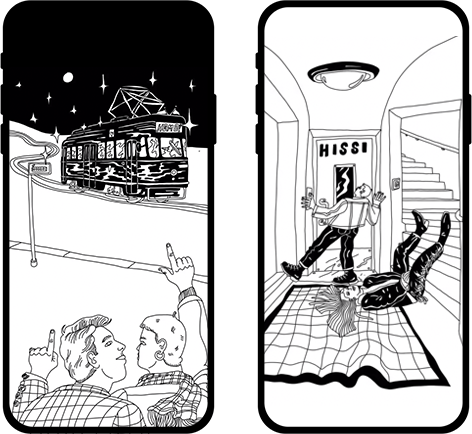
Sexy Pants and Other Problems was targeted to young queer urban individuals in order to deliver a credible queer representation in the media. But it didn’t stop there. They experimented with topics like middle aged body positivity, dating in your 20’s and a country’s fall into despotism. These aren’t only hot topics. They also offer a fresh approach to conveying news and information, allowing users to truly engage with the characters. This opened the door to empathy and understanding, an important value in journalism. Curious about the full story? Click here.
Potential of AI in media
Satu Keto (Innovation Lead) and Tove Mylläri (Team Lead Experiments & Collaborations) from Yle, discussed the potential of AI in media. Let's dive into their four cases representing the opportunities of AI, starting with the Ukraine New Service. The newsroom was created in response to the Ukraine Conflict to test how AI can enable quick and efficient news reporting of global events. Due to AI the newsroom was rapidly operational in contrast to traditional newsrooms that can take months to establish. Second is the GenZ Platform Pilot focused on the creation of synthetic hosts, exploring the possibilities of AI for marketing purposes. This represents a leap forward in content creation and brand promotion.

Thirdly, Yle experimented with audio deepfakes. The project convincingly replicates the voice of a radio presenter. This underscores the ethical concerns and the potential misuse of AI-generated content. Last but not least, they used an AI judge to assess violin performances, resulting in rankings that differ from human judges. This exploration of AI's potential in art analysis highlights how AI can introduce new perspectives into traditional domains. The cases underscore the importance of investing in tech and AI literacy workforce to remain in business. Curious about the full story? Click here.
Project Origin
Charlie Halford (Principal Research Engineer) from BBC with Project Origin, focused on the fact-checking of news. The project is a response to the declining public trust in media due to rising polarization, social media, shifting funding models, and the surge of generative AI technology. Project Origin is an alliance between the BBC, Media City Bergen, Microsoft, Telegraaf, CBC and IPTC to establish a chain of trust from publisher to consumer. The cornerstone of Project Origin is the Coalition for Content Governance and Authenticity, also known as the C2PA. The open standard offers a user interface that displays the provenance of media content. The tool reveals where content originated and how it evolved, allowing publishers and consumers to check for alterations or manipulations since its release.

The content's traceability is possible due the broad adoption of the C2PA standard across multiple platforms by a wide range of technology and media industry leaders. For instance, Canon is embedding this technology in their cameras and Adobe integrates it into Photoshop. This wide adoption gives users the transparency to make informed decisions about the authenticity of the content they encounter. Project Origin illustrates that trust begins with embracing transparency at every stage of the editorial process. The audience needs to understand how content is verified and where it originates. Curious about the full story? Click here.
Virtual Sports
Yves-Marie Poirier (Innovation Engineer) from France TV shed light on the world of virtual sports spaces. The project replicates the iconic venue of Roland-Garros in a virtual world, offering users a front-row seat experience to relive the iconic sport event. The virtual space is an exact copy of the Philippe Chartrier court and with exact we mean down to the last detail. The players are in the exact position and the ball follows the precise trajectory of the real life sport matches. The front-row seat experience goes beyond just reliving the iconic sport event.
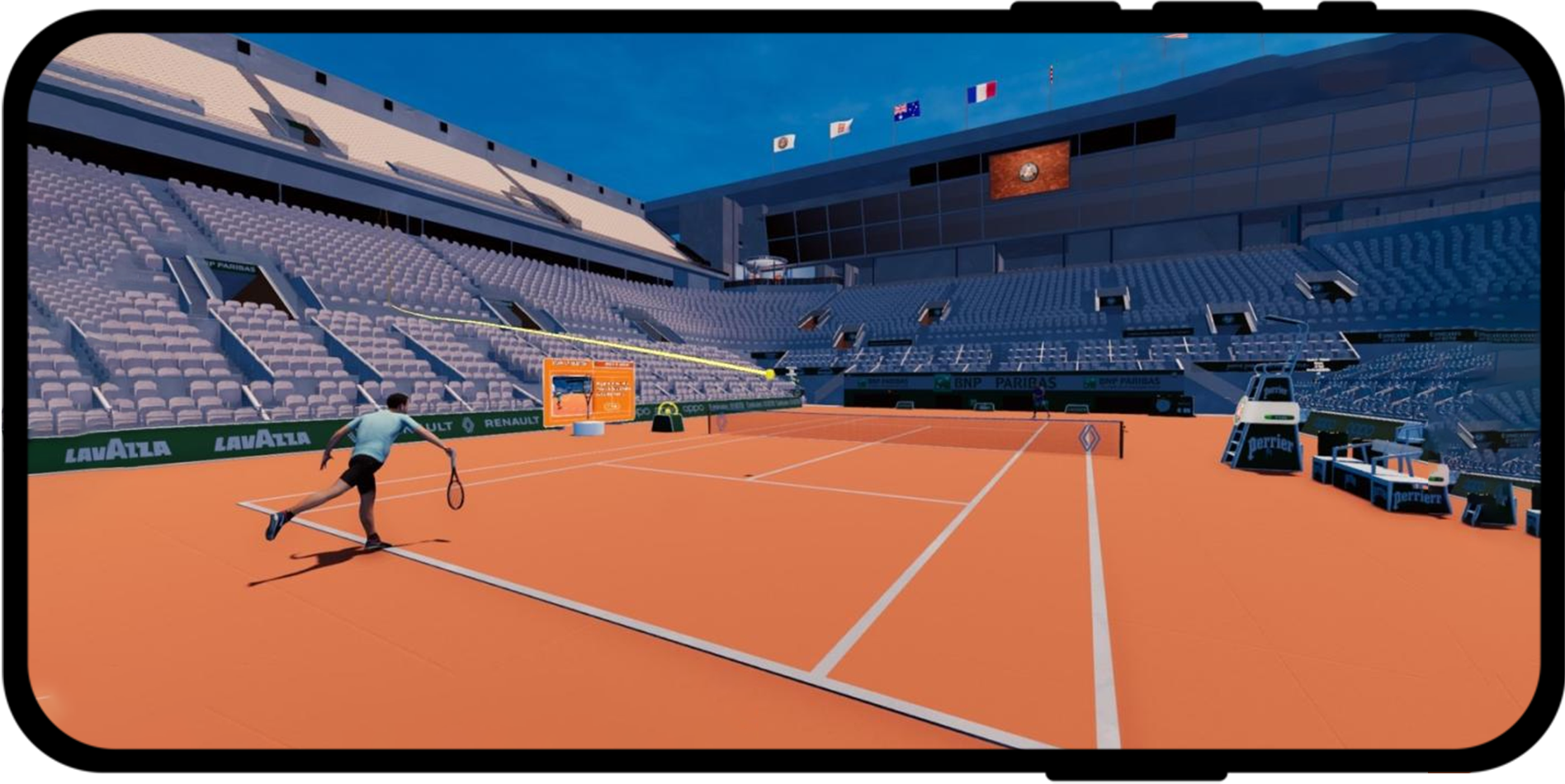
France TV also designed a virtual Olympic expo, engaging users into iconic sport highlights. But the emphasis isn’t only on providing content. Firstly, France TV established a virtual fan zone, allowing users to interact with avatars. Secondly users can play tennis mini games, adding an interactive layer to the experience. Last but not least, journalists at France TV can conduct interviews using virtual avatars. This gives users the feeling they’re part of the action, despite watching from the comfort of their homes.
The development of this virtual space relies on Unity, a powerful software that empowers the creation of interactive content and video games. Using Unity, the virtual space incorporates generative AI, augmented reality, mixed reality and metaverse to provide a realistic feeling. The project highlights that virtual sports aren’t just a trend. It's a transformative tendency that is reshaping the sports and entertainment industry. Firstly, technological advancements play a critical role in this tendency. This makes partnerships between broadcasters and tech companies crucial to realize virtual sport experiences. Curious about the full story? Click here.
Democracy Box
Yvonne Murphy (Freelance Theatre Director, Creative Producer and Creative Practitioner and Consultant) presented Democracy Box. The project engages young people as paid co-creators to interact with the intricacies of democracy year-round. The Democracy Box aims to bridge the knowledge gap which is a barrier to democratic participation. Yvonne has co-created 4 Democracy Box prototypes with young people aged 16-26 to tackle the democratic deficit. The first prototype involves a public information campaign, spreading the basics of democracy to a wide audience. The campaign's branding and content were designed by young co-creators, ensuring that the information is not only accurate but also engaging for the target audience.
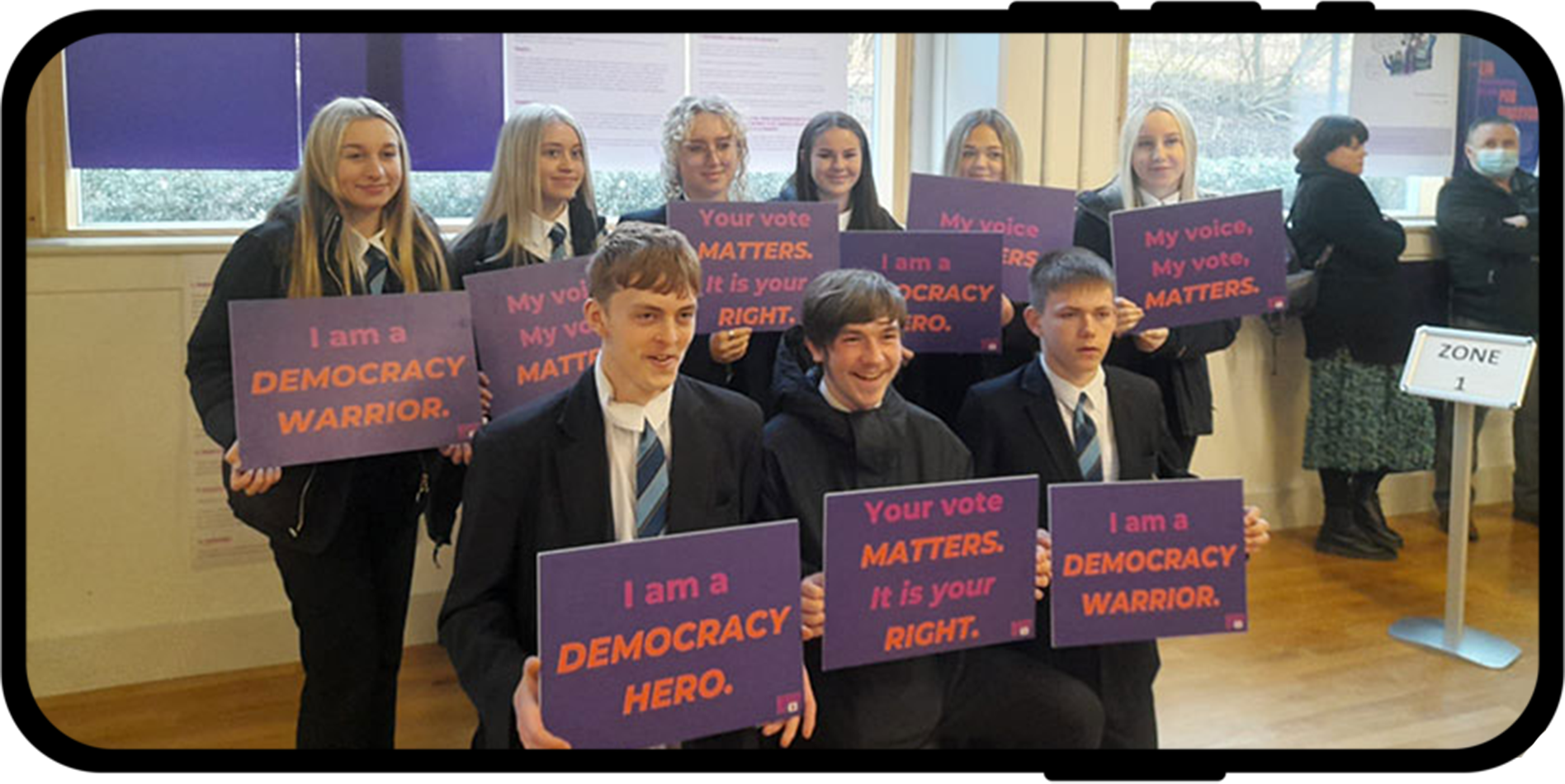
The second prototype concerns a school campaign, recognizing the importance of democratic education in schools. The program was developed to educate teachers on the essentials of democracy and then support their students to become young co-creators. The third prototype is The Talking Shop - a cultural and democratic information center. This space is a hub for people to learn about democracy through various mediums like screens, headphones, and booklets. Young co-creators are also trained to host the space, making it an interactive and engaging environment.
Last but not least, the toolkit for working with young co-creators, guiding individuals and organizations on how to work with young people as co-creators. This toolkit enables others to replicate the model and expand the initiative's reach. The Democracy box highlights that the real challenge lies in reaching people in power, not the youth themselves. Young people are eager to engage in democracy but require guidance and knowledge to do so effectively. Curious about the full story? Click here.


