70 YEARS TV INNOVATION SUMMIT Looking at the past and future of television

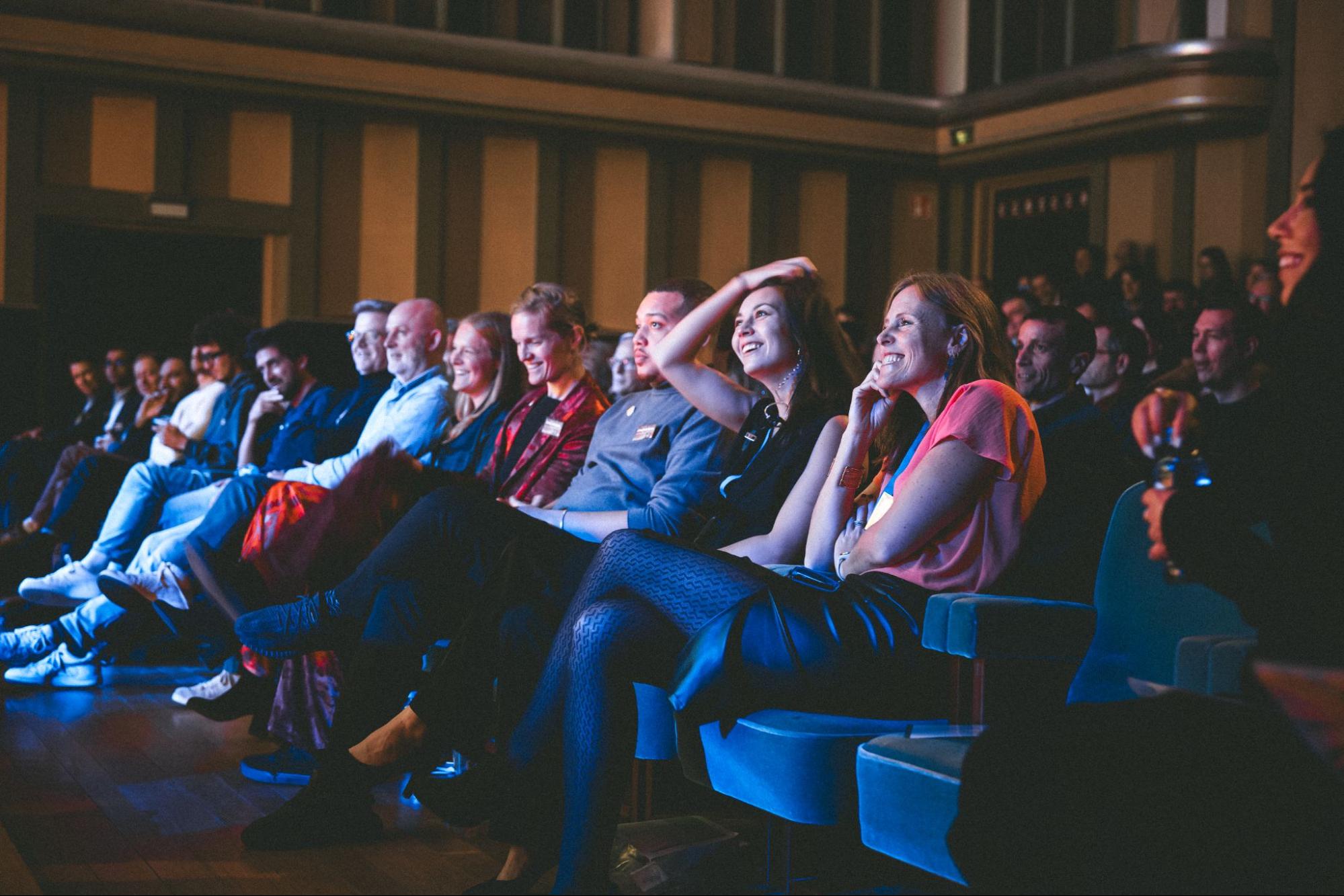
On December 5, 2023, VRT and MediaNet Vlaanderen celebrated 70 years of television in Belgium. Not coincidentally we did this at Flagey, the iconic place where, in 1953, the very first Flemish television broadcast took place. Seventy years of television also means seventy years of visual milestones and technological evolutions. That's why we took a day to reflect on the past, but also on the future of visual media. What are the challenges for today's creators, and which new technologies can assist them? And what does the word 'television' mean seventy years after the first CRT became the centerpiece of many living rooms?
Continue reading to discover what we learned from six interesting panel discussions and two inspiring presentations. Only the music, performed by Tsar B, you'll have to discover on your own.
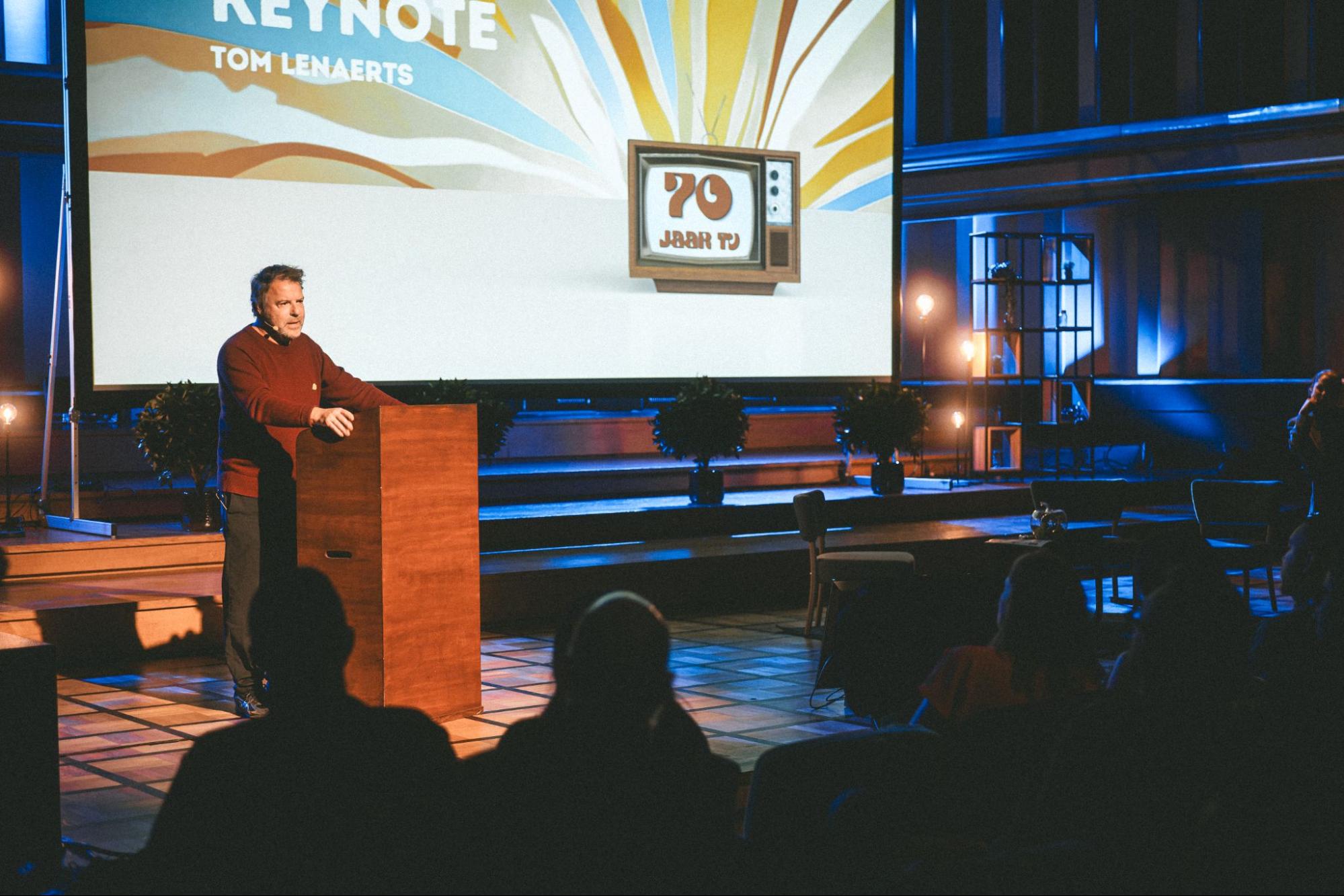
None other than Tom Lenaerts opened the summit by reflecting on his career within the Flemish television landscape. In 1992, his first job description read: creating a fun atmosphere. During his time at BRTN, Tom came up with the idea for a series, pitched the budget, and started with 20,000 euros per episode for what would later be known as the iconic 'Schalkse Ruiters.' In 2023, it's impossible to fully finance a program with one partner, let alone sell to your accountant that ‘creating fun’ is an artistic profession. Although today it is more challenging for a production company to secure financing, the shifting landscape also provides more places where your idea can thrive, not to mention the international possibilities. In short: the world is becoming larger, but so are the opportunities.
However, the globalization of the media industry also has its drawbacks: the more people you're dealing with at the table, the more of them you have to keep satisfied. Additionally, the overhead costs for a small production company are much higher than they were thirty years ago, requiring a more complex organizational structure within the company. Besides that, today viewers gather information through various channels, resulting in less common ground for shared knowledge. This is not only a philosophical but also a societal problem. Because isn't the role of television precisely to connect people? We all seek something that binds us, whether it's the news or the daily drama in our favorite soap opera. That universal need never changes, even when new and international players enter the local market.
Tom concluded his introduction with a message of hope: much has changed in the last thirty years, but opportunities for creators have also increased. The chance to create on a global scale has never been greater. Because our strength as Flanders lies in the ideas of the creators, we have to ensure they aren't swallowed up by large international groups. That is why networks must invest in an environment where creators can nurture new stories. Essentially, investing in a fun atmosphere.
Young viewers yesterday, today, and in the future
In the first panel, moderated by Danira Boukhriss Terkessidis, we asked a young creator and an experienced researcher for their perspectives on the evolution of the media landscape. Kristin Van Damme (PhD), a senior media researcher at imec-mict-UGent and a lecturer in Communication Sciences at UGent, has conducted extensive studies on media usage among both youth and adults, including research such as Apestaartjaren, Digimeter, and de Nieuwsbarometer. She is also the Coordinator of Mediapunt, the knowledge center for media research in Flanders. Alexandre Mestag, co-founder of the management agency Koolisse, together with Kijken Mag, launched the media platform Koolisse Media in 2021. Their mission is to create media by and for young people. Together with them, we examined several propositions about 'the' youth.
For instance, it's often claimed that young people prioritize entertainment over being informed when it comes to their media consumption. Alexandre debunks that idea. According to him, young people are actually more interested in news, but it's crucial to know how to reach and engage them. Often, discussions about young people don’t involve the next generation.
The assumption that young people only want to see short, flashy content is categorically disproved by Kristin. Today, everyone binges a good series. If young people find a story that interests them, they will engage with it just as much. What does work are short teasers on social media that pique curiosity to watch more 'classic' programs. Kristin also emphasizes the unifying role of television: watching together remains an important social activity.
Kristin and Alexandre then discussed the importance of involving young people in the production of the content targeted at their age group. Alexandre acknowledges his shared role as a creator in this regard: he aims to entertain, but also conscientiously address the fact that he has a voice that young people listen to. This is a result of taking his audience and their concerns seriously. Therefore, he places great importance on responsibly conveying the information he shares with his viewers.
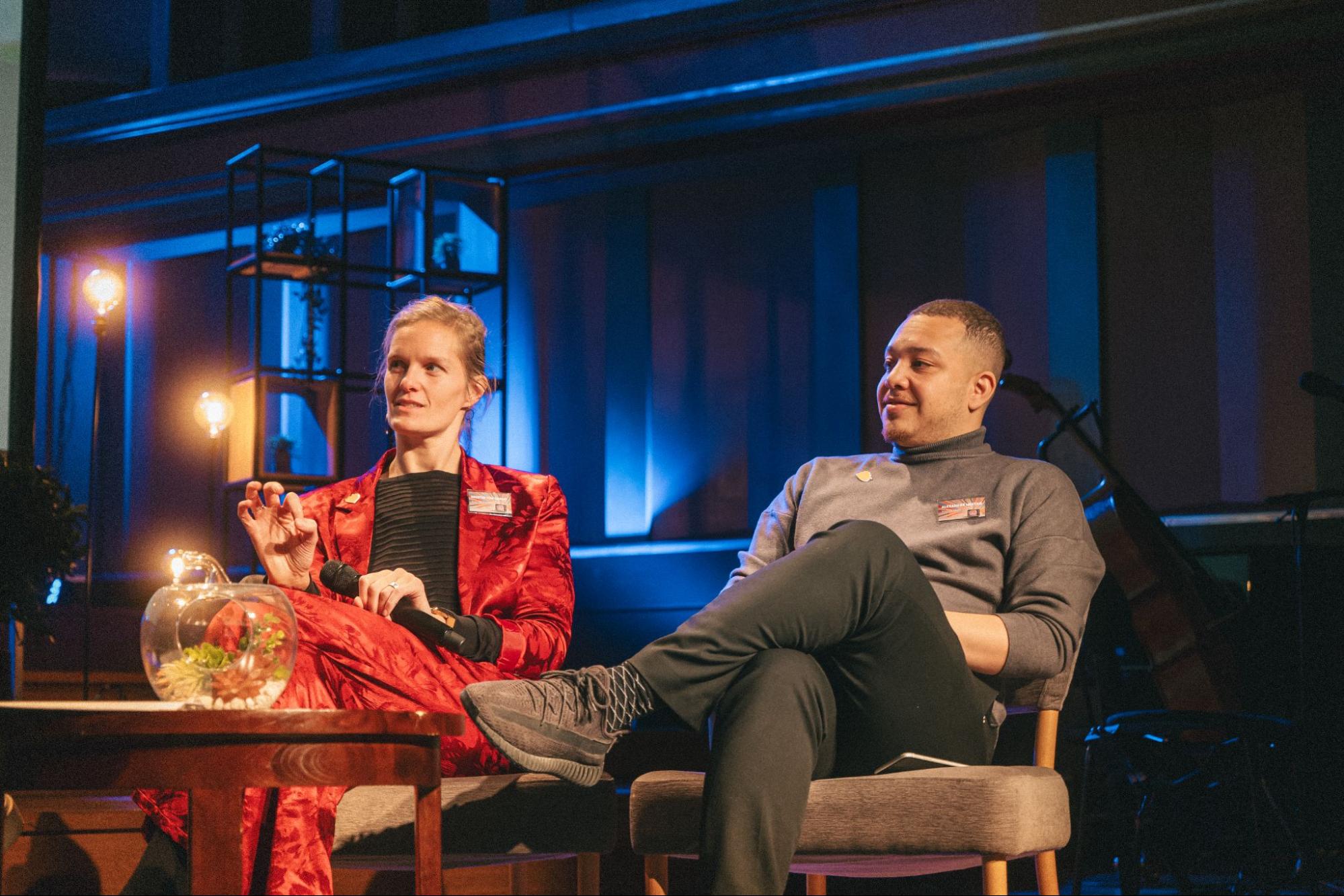
When asked what Kristin and Alexandre would do differently if they were in charge of a large media company, Kristin emphasizes the necessity for content aimed at young people to also be created by young people. She urges major production houses to support young creators in their creativity. Alexandre also believes that there's much to gain by collaborating with the target audience rather than solely producing for them. Additionally, he emphasizes the importance of properly compensating the young talent being utilized. Kristin concluded the panel by calling on media companies to strategically use social media, namely as a gateway for young audiences to discover the right content on the appropriate platform.
Local production in a global market
In the second panel, Laurien Poelemans from De Mensen, responsible for international financing, sales, and co-productions, and Bert Hamelinck, co-founder and Managing Director of Caviar Group and head of Caviar Film & TV, analyzed the financial aspects of the growing market for high-end fiction series.
The discussion largely focused on our increasing dependence on international resources within the Flemish fiction industry. Due to streamers' and channels' resources not scaling with inflation, the share of Flemish platforms is diminishing, leading to a significant decline in domestic financing for television series. While collaborating with other countries offers many opportunities, it also presents numerous challenges.
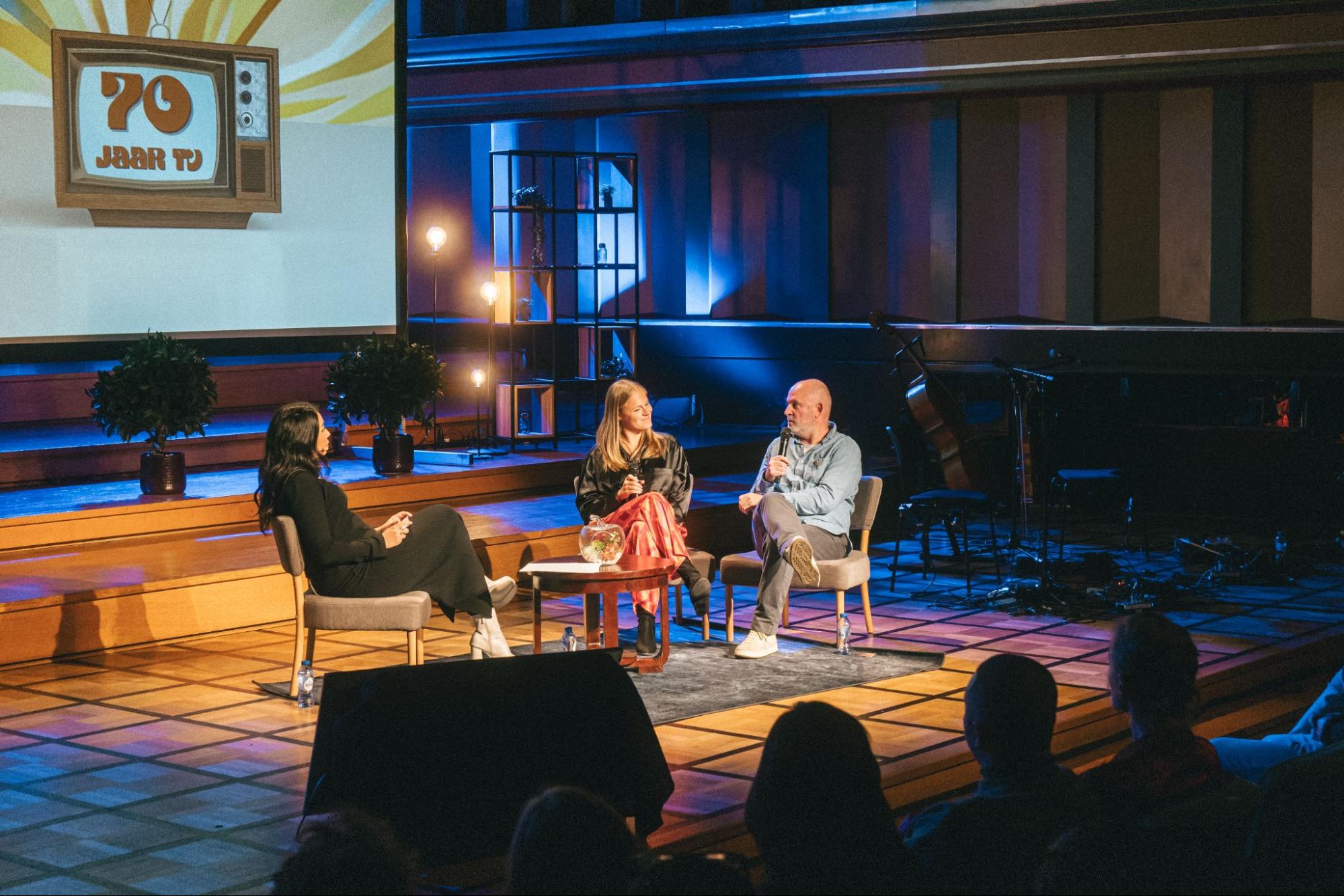
Bert emphasized that collaboration with Flemish partners must remain the starting point of every production, because our biggest advantage over international colleagues is our talent and their capacity to develop strong stories. But after that, producers must enter the international market, which leads to a complex game involving numerous parties, each representing their own target audiences and interests. Laurien also stressed that the increase in editorial input from various co-producers makes the creative process increasingly challenging. Furthermore, the complexity of rights and exploitation is also growing. Therefore, Bert stated that it's necessary to join forces. Only then can we collectively stand stronger to meet the ever-growing demands of the market.
The advice for media creators remains the same: believe in the fact that we in Belgium are strong storytellers and that intellectual property is our great strength. It's important to keep searching for talent and provide them with the room to develop. Bert also emphasized that a good idea will ultimately always sell, but the challenge is to ensure that you stand out and, above all, never give up.
Connecting worlds
We concluded the first round of panel discussions with two creators who have succeeded in reaching young audiences while also captivating a broader viewership by collaborating with traditional broadcasters and bringing their work to life online. Tom Goris is a co-developer and director of Knokke Off (High Tides). He is also one of the minds behind wtFOCK and currently works as a freelance head director at SPUTNIK MEDIA. Manu Vanderjeugd began as a freelance cameraman at 19 and founded the production company Geronimo in 2008. He has produced award-winning documentaries like 'Soundtrack' as well as successful television formats such as 'Helden van hier', 'Blind Gesprongen', 'Snack Masters', and recently 'Bestemming X', which won the Golden Rose on November 27 2023.
The conversation started with the question of whether Tom Goris has found the formula to reach young people with the success of Knokke Off. Unfortunately, he admits that hasn’t. The only common thread Tom can draw in his work is that the creators of wtFOCK and Knokke Off present the world of young people in a mature way. Previously, stories about young people often revolved around those of adults, but these series show that placing young people at the center of the story broadens the audience; adult viewers still feel addressed and resonate with the reservoir of emotions they had in their own youth.
Bestemming X also succeeded in connecting different generations in its own way. Unlike Knokke Off, they intended to create a program that would appeal to both young people and their parents. Taking 'De Mol' as inspiration, they devised the concept of an adventure program catering to everyone. While the 'older' audience watches the impressive visuals of Europe, the younger audience can identify with the cast's age. Additionally, the interactive aspect was crucial for Geronimo. Therefore, they developed a successful gaming app and during the years-long development, they also considered how the different format elements could find their way onto platforms like Snapchat and TikTok.
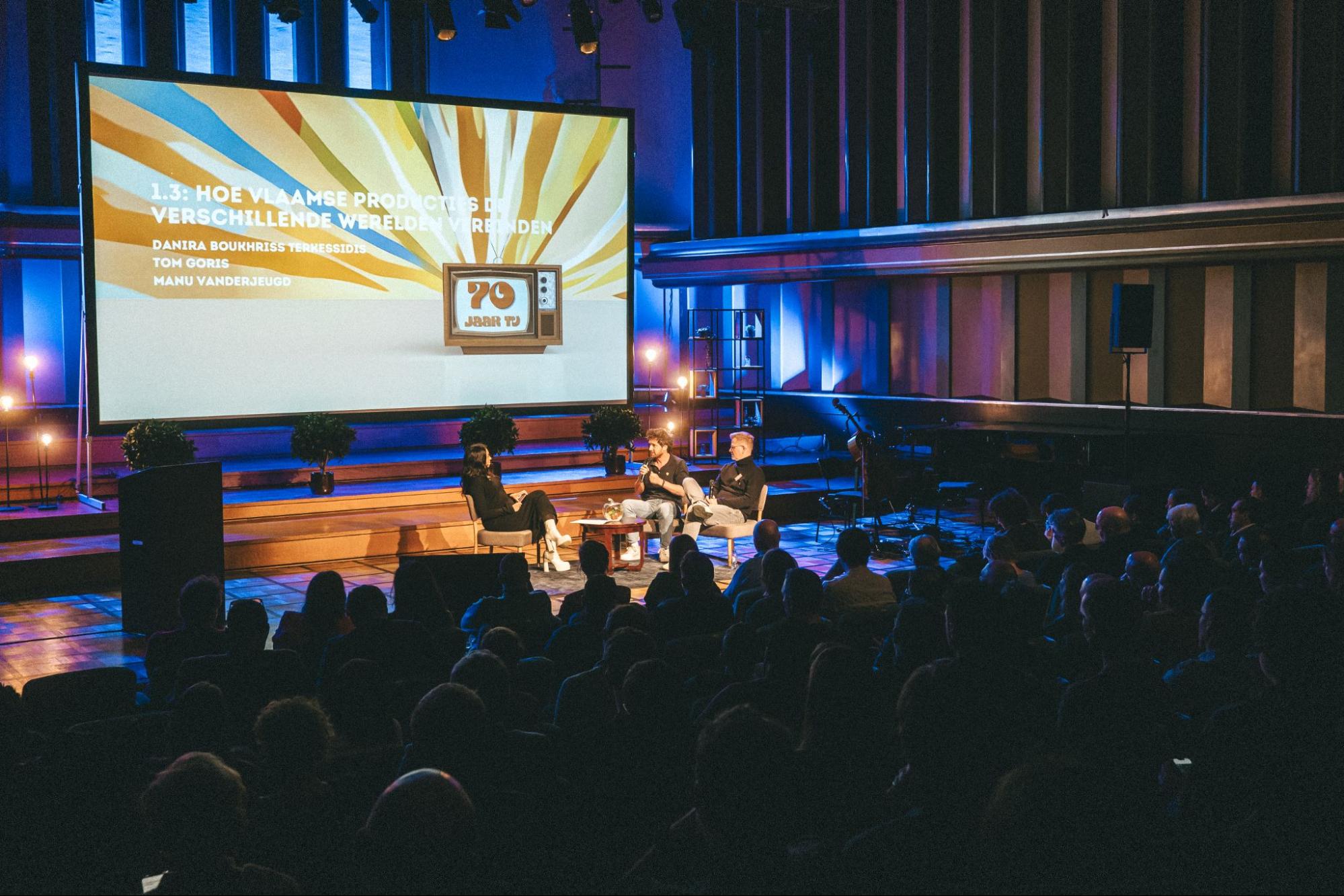
Working in media is inherently linked to compromising with the many partners involved. Tom emphasized that as a creator, he's always seeking parallel development during the process, rather than the linear thinking typical within the industry. He explained that he often tries to gather as many different perspectives on an idea as possible. Even during the writing process of Knokke Off, for instance, he had a talk with the editor beforehand.
Bestemming X also had to creatively seek financing as producing an adventure program is very expensive. They achieved this by creatively integrating and activating partners from the market. For now, Geronimo is exploring less conventional paths to recoup their investment. Currently, they are considering international options and using the concept of Bestemming X as an event for companies.
After discussing 'youth' for about an hour, determining who exactly that young person is, remains tough for everyone. Tom mentioned that while VRT immediately saw the potential for a broader audience with Knokke Off, partner Netflix questioned whether the finished product was niche enough to succeed. Because according to their data, Knokke Off wasn't going to score with the target audience. As a creator, you find yourself in a dilemma, so eventually, he decided it wasn't possible to please everyone. But after Knokke Off proved Netflix's predictions wrong during the summer by holding the number one spot for ten weeks, Tom is seeking answers regarding the data in question. How can creatives be involved in analyzing that data? It's an interesting aspect, but we need to do more with it. One thing proved by the international success of Bestemming X and Knokke Off: there are currently a lot of global opportunities for television that focus on connecting different generations, rather than categorizing them.
Telling stories with AI
After the break, we shifted the focus of the panels to explore how new technology impacts media creators and consumers. We started with a video by Matthew Blakemore, demonstrating the democratization of creativity by fully utilizing AI-generated elements. Then, we were treated to a keynote by Jordi van den Bussche, aka Kwebbelkop. He's known as a gamer and streamer on YouTube, but his influence extends much further. Recently, Jordi created a stunningly photorealistic digital twin of himself that has taken over the creation of his content.
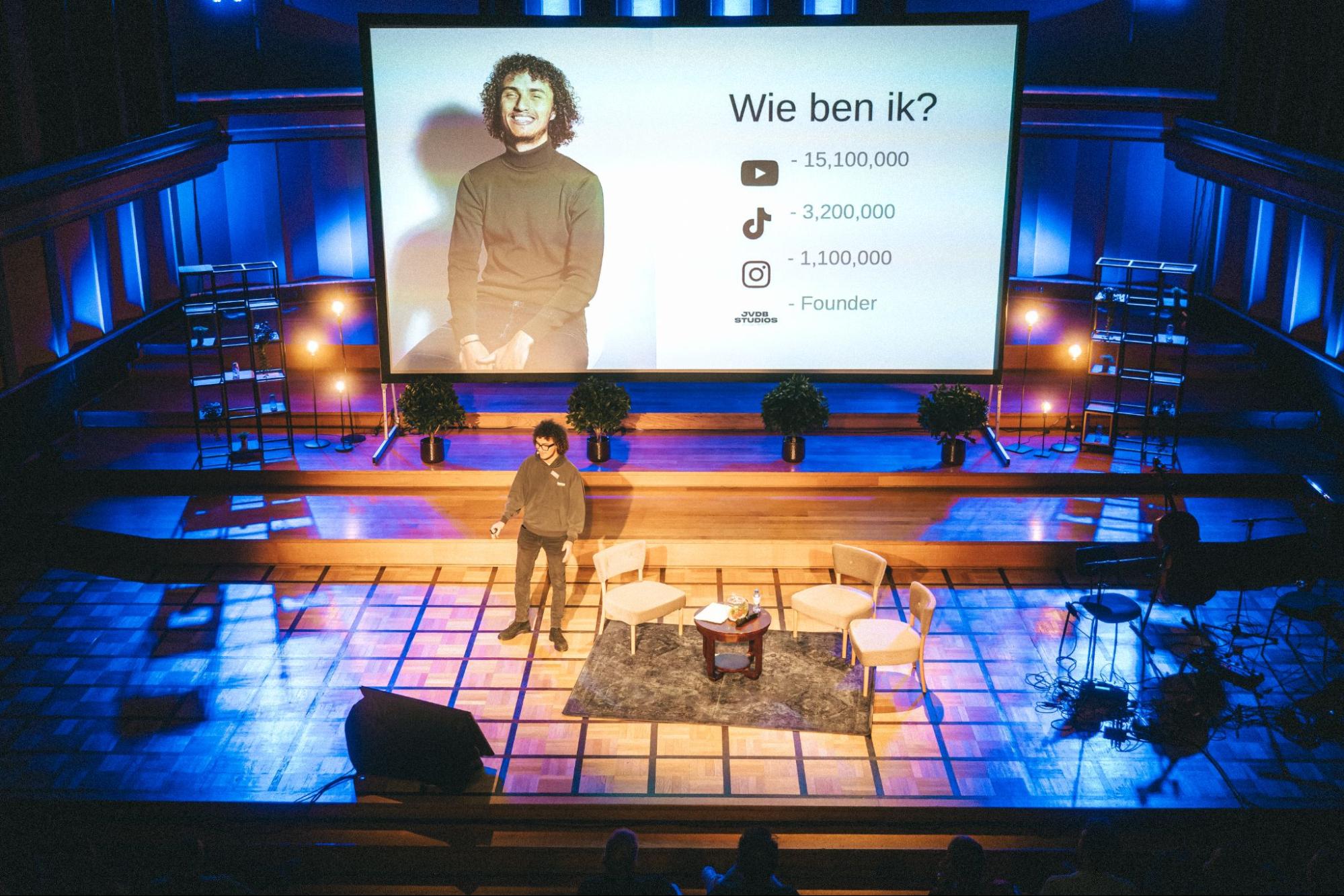
Jordi's quest for innovation began with the question: "How do you stay future-proof as an influencer?" After successful experiments with Bloo, a virtual influencer, Jordi decided to explore if he could digitally clone himself as well. Today, his team has developed software and systems that enable AI to entirely produce his videos, allowing Jordi to focus on other storytelling aspects. However, the focus of Jordi's presentation was not about how a machine renders humans obsolete; on the contrary. According to him, computers exist to serve us, not to replace us.
For the first panel, Jordi was joined by moderator Loutfi Belghmidi, communications manager at Microsoft and former tech journalist at VRT, and Xander Steenbrugge, an engineer with a PhD in Deep Learning, boasting almost a decade of experience in data analysis and Machine Learning. He's a co-founder of WZRD.ai, where he uses AI to enhance audio with computer-generated videos.
After our introduction to Jordi's digital twin, Loutfi was curious about Jordi's relationship with the AI version of himself. Jordi views “him” primarily as a tool in his toolbox as a storyteller. However, discussing AI also means discussing its dangers. Jordi made it clear that he follows ethical guidelines. Within JVDB Studios, the team follows a protocol to determine what is and isn't acceptable for the AI to do. The rule is simple: if Jordi wouldn't personally do it on camera, then the digital twin won't do it either.
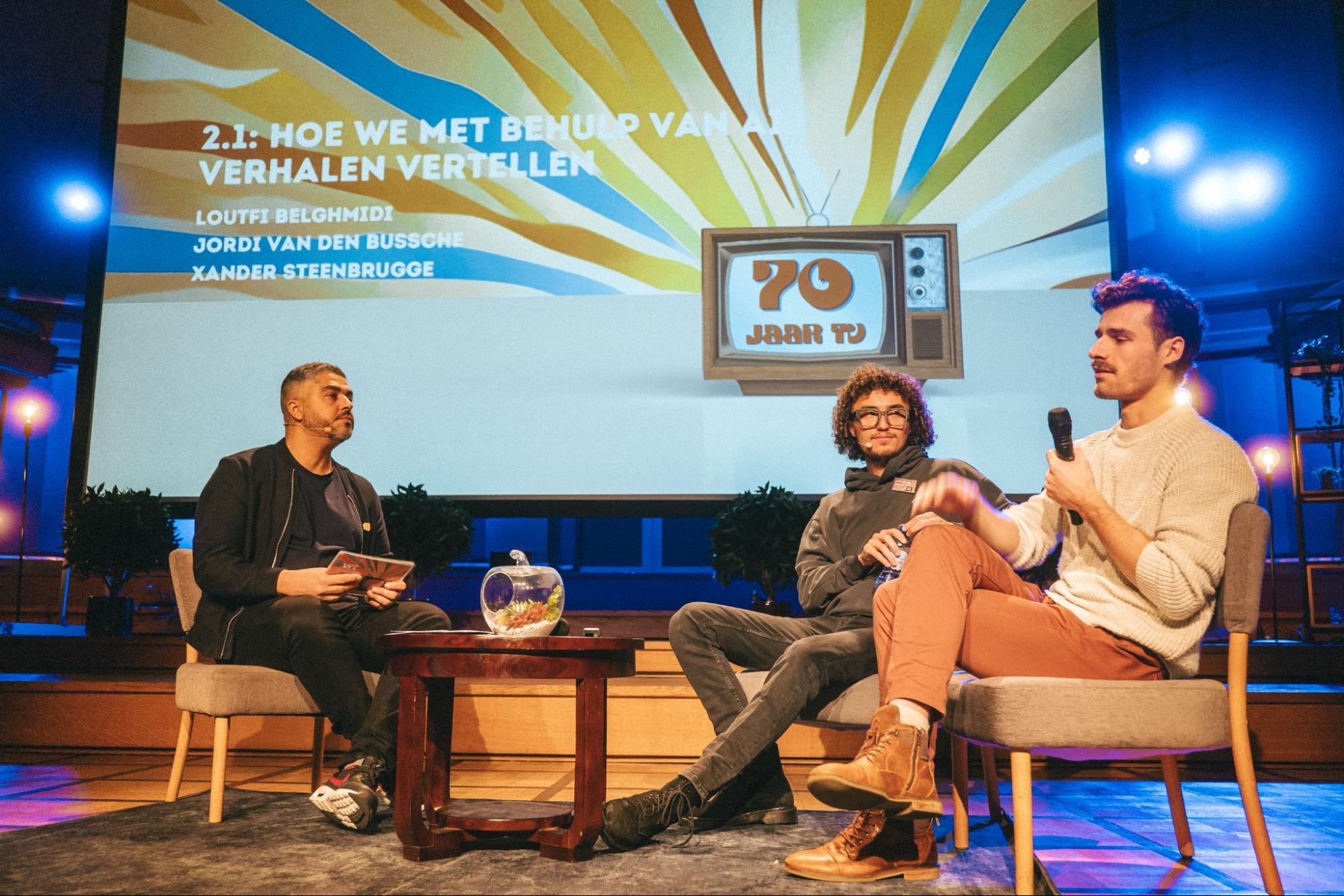
When asked how AI can enhance the work of people in the media, Xander responded that it makes more sense to focus on how AI can improve and personalize the things you do within your company, rather than focusing on automating existing processes with AI to save costs in the short term. He gave an example: don't fire screenwriters to let a computer write a TV-show, but have the writers develop 10 different versions, then use AI to predict which versions appeal to which audience, and use that feedback to enhance the quality of the work. According to the panel, Artificial Intelligence won't make people redundant, but it might replace those who don't utilize AI. Young companies are more inclined to embrace innovative tools, becoming strong competitors for companies more hesitant about new technologies.
Like with most new things, Jordi also faces backlash regarding his digital twin. He understands that the new technology is a big step for everyone. However, the increasing numbers speak for themselves: in just 2.5 months, Kwebbelkop went from 30 to over 100 million viewers per month. The company has grown incredibly fast and hard, partly due to the ability to consistently produce content.
However, the panelists both believe the questions about AI are valid; a significant issue revolves around dealing with copyright. Additionally, platforms like TikTok, skilled at endlessly scrolling their users, can generate tailored videos for each user in a very short time. We need to remain aware of this dystopian future. Xander mentioned that the technology itself is neutral, but what we as humans decide to do with it determines the outcome. Jordi and Xander agreed that we need to carefully consider the goals we assign to these systems and that laws and regulations need to be tightened.
Television and the digital world
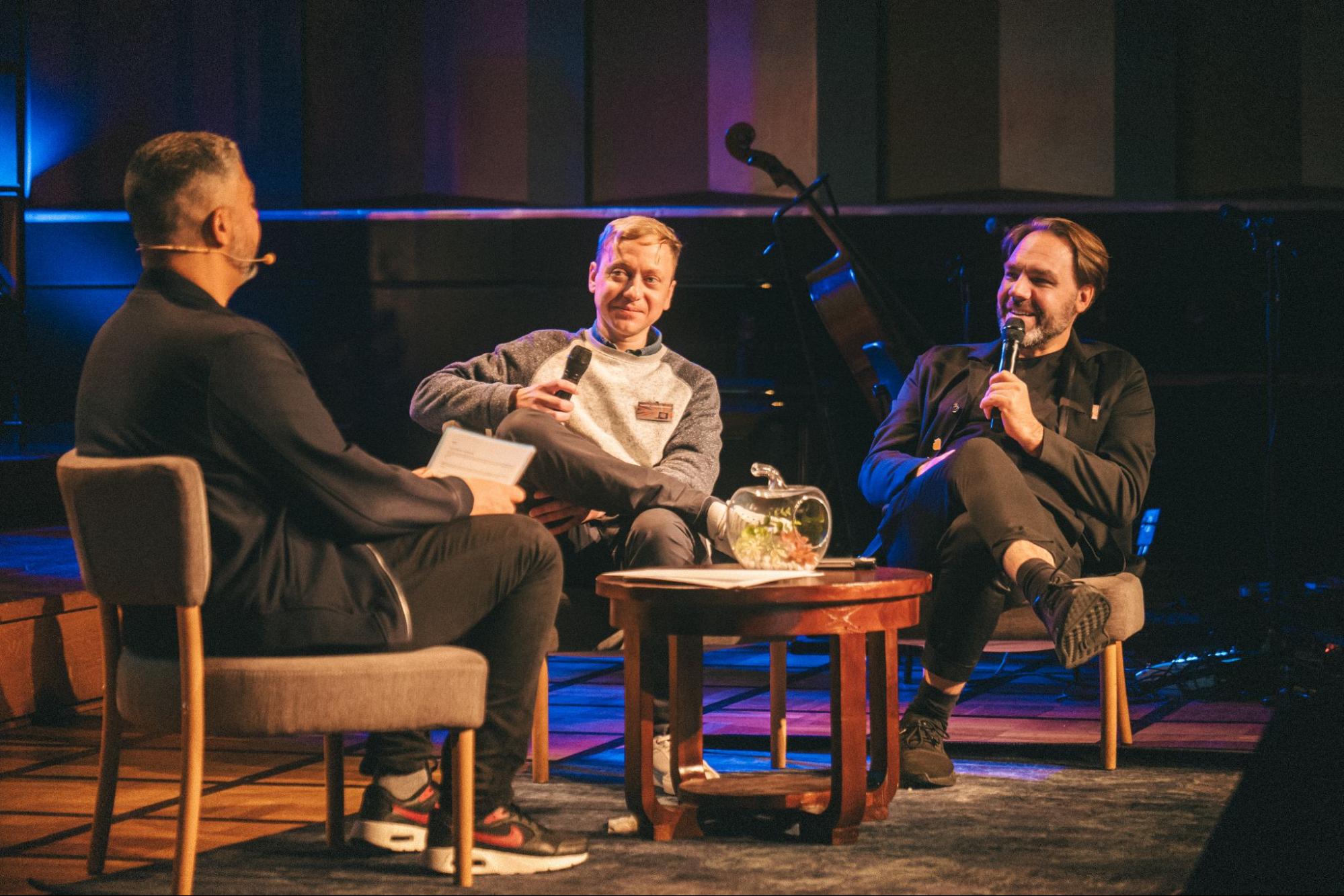
Jan Hameeuw is one of the driving forces behind The Pack, an integrated digital studio originating in the post-production world. Timothy Vanherberghen is the founder of Triangle Factory, a studio that began in gaming and evolved into a virtual reality studio.
In recent years, we've seen tremendous progress in digital creation, Jan explained. Thanks to virtual studios and game engines, we can bring digital worlds to life, both for film and television. At The Pack, this began with the movie Labyrinthus, where children enter a game world. This experience encouraged The Pack to further experiment with integrating digital and virtual worlds in game engines. Triangle Factory also explores the intersection between the virtual and traditional television worlds. Their VR productions primarily focus on expanding the reach of specific intellectual properties, such as bringing 'De Mol' into 'The Park Playground' in virtual reality. However, Triangle Factory's focus isn't solely on VR; just like television, the goal of gaming is to connect and bring people together. Jan also noted that the worlds of gaming and television are increasingly converging. Previously, games were often based on movies, but nowadays, we're also seeing the reverse happening.
Regarding costs, the game industry also shows strong similarities to the film and television industry. As the quality of the content grows, costs escalate as well. It is crucial for the gaming sector to consider the international ambitions of a project from the outset, considering the Dutch-speaking market is too small to make a game profitable. However, the advantage of starting in the gaming sector is that you immediately enter the international playing field, according to Timothy, something Jan wholeheartedly confirms.
5G and event production
With the rise of Fiber and 5G, connections are becoming faster and more stable. In sports, events, or journalism, this makes it possible to have a smaller team on-site while a production team works remotely or in the cloud. This technological change leads to lower production costs, more unique content, and reduces the media industry's ecological footprint. The summit concluded with two specialists in the field of remote production.
Stef Lambrechts is the CTO of EMG Belgium, a service company offering a wide range of technical facilities and technicians. Stef was one of the leading designers of the modular and scalable IP platform dIPloy, which has been used at numerous international events and implemented throughout the EMG group, from mobile data centers and OB trucks to control rooms and Remote Operating Centers (ROCs). Abhishek Ranade, based in London, is the Managing Director at Tata Communications, an Indian telecommunications company. His strategic insights have led to significant revenue growth and the expansion of the company's European operations, collaborating with Formula 1, Sky UK, and UEFA.
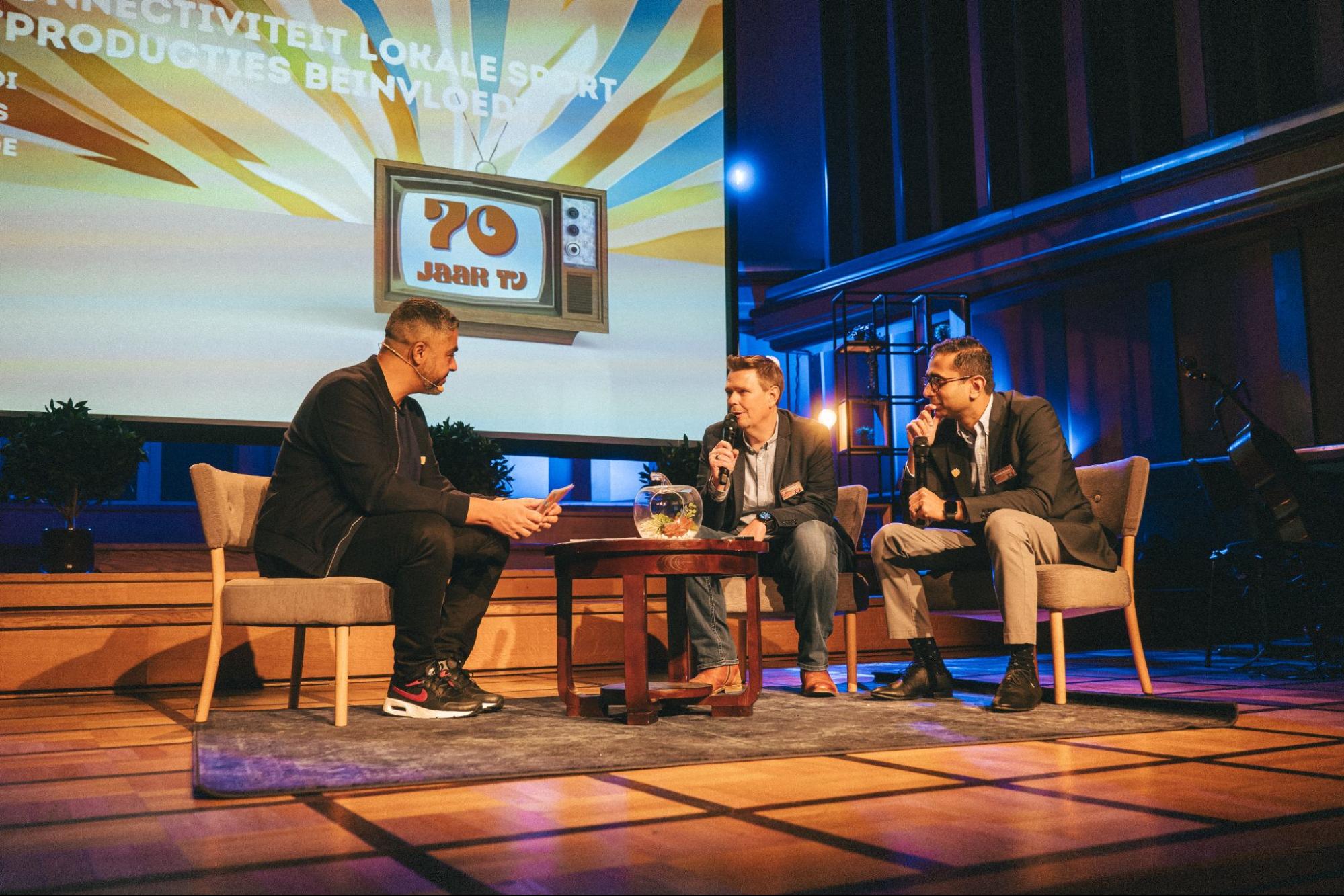
Stef started the conversation by emphasizing why remote production is causing such a shift in the media sector. Firstly, it's much more cost-effective, such as at major events like the Olympic Games, where one control room can produce multiple events. Additionally, 5G creates new opportunities for live reporting and can deliver content much faster to the viewers. Abhishek confirmed that the new technology also makes the recording of major international events, like Formula E, more scalable. Furthermore, 5G enables quick sharing of live footage from a sports event with smartphones worldwide.
Another significant advantage of remote production is its environmental friendliness: it significantly reduces crew travel and efficient technology usage also translates into lower energy consumption. Abhishek emphasized that most technology is moving towards a greener approach, but a lack of sufficient 5G infrastructure in some places remains a hindrance.
Looking to the future
During the summit, it became clear that significant changes have taken place in the financing models of television. Previously, a TV-show would be funded by a single network, but since the emergence of streamers, this has become considerably more challenging. In 2023, there are more stakeholders and complexity in terms of organization and financing, but it also creates opportunities and platforms to bring your work to the audience.
To avoid becoming entirely reliant on international partners, it is crucial to continue investing in strong stories. Furthermore, actively involving young talent in the production of content targeted at their particular age group is necessary. The importance of fair compensation for the future media creators was also emphasized once again.
Despite all the challenges, there are fortunately also a lot of promising prospects. Despite the fragmentation of platforms, television continues to play a key role in connecting people. Meanwhile, we are also making strides in technological and environmentally friendly advancements. In short, the future of television looks more promising than ever.