Forecast 2023: Media and Young target groups

Which trends and innovations will shape the way we communicate with young people in 2023?
As we move into 2023, the media landscape is rapidly changing. Legacy media and broadcast media are struggling to stay relevant for younger generations with their platforms as more and more people turn to use third party platforms for their digestion of news and entertainment.
Which upcoming trends will be of importance to take into account for those who work with reaching young target groups in the media industry? Which platforms would be of importance and which new innovations are seen as a threat or opportunity? I will hereby try to present some core trends in user behaviour and innovation that will affect how we interact with young people in 2023.
Top trends 2023
Some possible trends we might see in the coming years include the increased use of artificial intelligence and machine learning to personalise and improve the user experience, the rise of virtual and augmented reality, and the continued growth of mobile and video-based platforms.
But let's start with the latest trend…
#AI generated content
There is no doubt that AI will change workflows, value chains and do work tasks that until recently have been reserved to humans. To give an answer of how AI will affect broadcast- and legacy media in their aim to hit its young audiences, I consulted the Chat GPT robot. Chat GPT, (or Generative Pretrained Transformer), is a type of language model that uses deep learning to generate human-like text.
Which trends will be important for traditional media and broadcast media to be aware of in 2023 to ensure that they stay relevant in a fragmented media reality?
Chatbot answering: In order to stay relevant in a fragmented media reality, traditional and broadcast media companies will need to adapt to these trends and find ways to incorporate digital media, mobile technology, and social media into their operations. This might involve developing new digital platforms or services, creating mobile-friendly content, and using social media to connect with audiences and build brand awareness. Additionally, those companies will need to focus on providing high-quality, engaging content that meets the needs and interests of their audiences. This will require them to stay up-to-date with the latest industry trends and innovations, and to be willing to experiment and try new approaches in order to stay competitive.
What are the most important issues legacy media will have in 2023 for reaching young audiences with their content?
Chatbot answering: Legacy media companies will need to find ways to adapt to this changing landscape and compete with digital and social media platforms. This might involve developing their own digital platforms and services, creating engaging and relevant content that is specifically targeted at young audiences, and using social media and other digital tools to connect with and engage these audiences.
Legacy media and broadcasters need to stay up-to-date with the latest trends and topics that are relevant to young people, and be willing to experiment with new formats and approaches in order to remain competitive.
#New tools for creating content
As we see, the Chatbot is “reflecting” and giving an answer that looks human-written. Based on my own experiences from working with hitting young target groups with visual design and digital content, the chatbot's answer fits perfectly, but the Chatbot is limited to information available up until 2021 so it struggles more when asked to predict something. When considering the chatbot's lack of understanding facts it is still crucial that a human-hand go over text, rewrite and check up facts before entering “publish”. The use of Chatbot in this article also illustrates that AI can both create quality content and be an important opportunity, but also be a threat for the profession of journalists. The chatbot was released in november 2022 and it's a reason to believe that the quality and “human created look” would be better and better every week.
AI could also assist e.g. journalists in conducting research, generating story ideas, checking authenticity and facts, optimising headings and more. AI algorithms can analyse large amounts of data and extract relevant information that can be used by journalists as the basis for their reporting. Additionally, natural language processing (NLP) technology can be used to help generate coherent and engaging articles. Furthermore, AI can be used to generate images, graphics,audio, and video content.
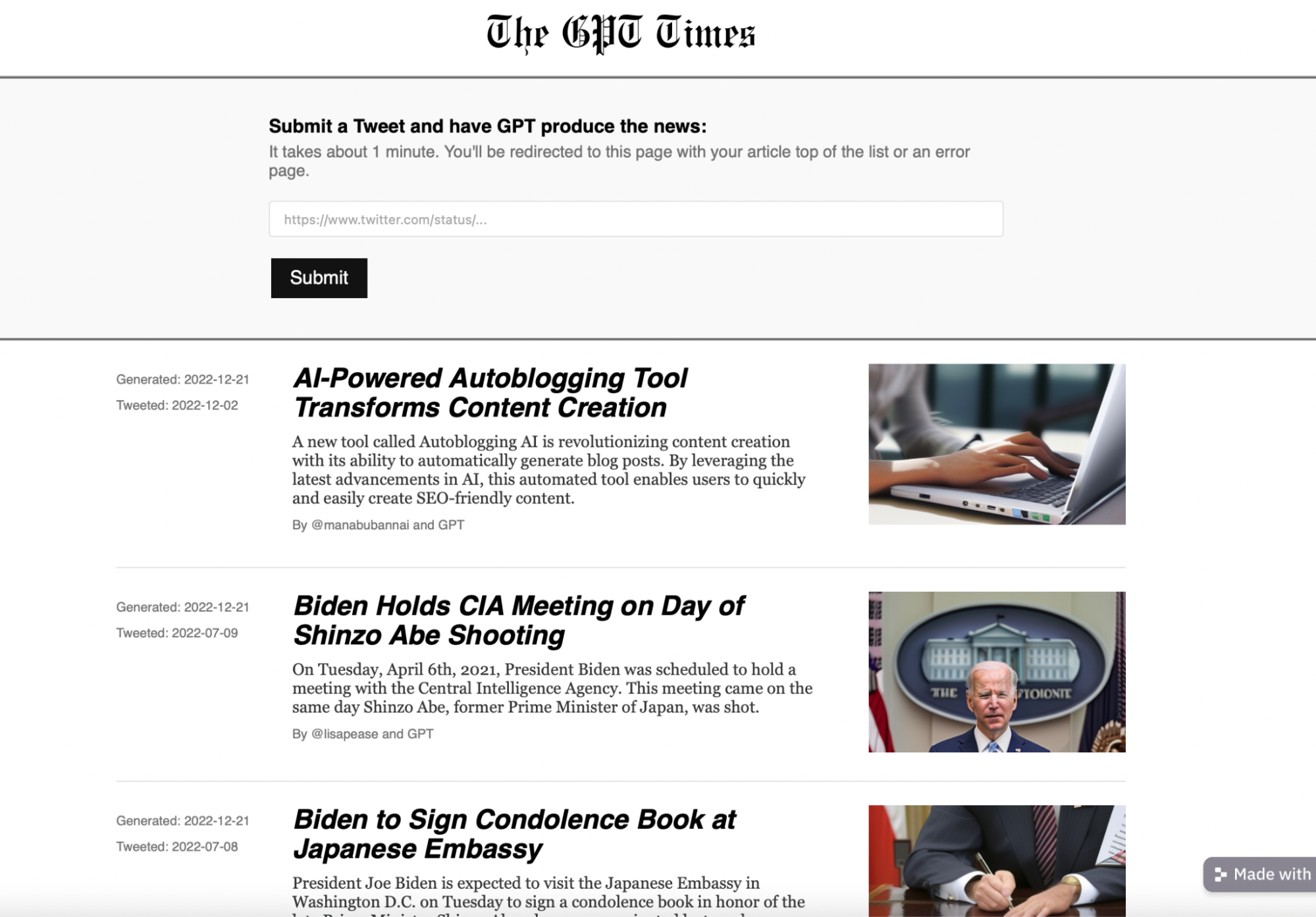
Is this seen as a threat for creatives and journalists or is it an opportunity, as a tool to ease and narrow their work? Probably both. We already see fully automated newspapers, generating pictures, illustrations and articles without people lifting a finger, but so far this can't be considered as reliable or well written service.
#Increased audience fragmentation and use of platforms
We'll see an increase in the fragmentation of the media landscape in the coming years, as more platforms and technologies emerge and people have access to a wider range of content and information. This could lead to a more diverse and fragmented media reality, with people accessing and consuming media in a variety of different ways. However, it's also possible that new technologies and platforms will emerge that help to bring people and communities together, creating a more connected and cohesive media landscape. Ultimately, the future of the media landscape will depend on a variety of factors, including advances in technology, shifts in consumer behaviour, and the actions of media companies and platforms.
One trend that we're likely to see in 2023 is the continued rise of content providers and platforms that aim to reach the same target groups attention. With the success of platforms like Netflix, Amazon Prime, and Disney+, more and more companies are entering the market with their own streaming services. This has led to an increase in the amount of original content being produced, as well as a shift towards subscription-based models. Personalisation is a keyword taken into account and we see a rising trend in personalised content, feeds, suggestions and so on.
On the other hand, there are a few reasons why broadcasters and media companies may choose to stop using third-party platforms for publishing their content in the upcoming years. We already see actors, such as NRK in Norway, starting to reduce their presence on third party platforms such as Facebook and Instagram. By publishing content on their own websites or platforms, media companies have more control over the content and how it is presented. This can be important for maintaining brand identity and ensuring that the content is presented in the way that the company intends. In this case, algorithms actually comprise the values that editor-controlled media are having which can lead to a decreased trustful relationship with target groups.
#Decreased truthfulness
Trust is crucial for legacy media. Public media play a crucial role in promoting accountability, accuracy, credibility, reliability, impartiality, and independence, which are all essential for the health of any democratic society. If the audience loses their credibility connected to their core values, we have a huge democratic problem.
Public media still tend to be among the most trusted sources of news and information. Especially during crises, such as the COVID-19 pandemic when scores of audiences, including young people, turned to their public broadcaster because they were associated with being a trustworthy source for news acquisition. But how do legacy media ensure that they sustain their level of trust with their audience outside periods of crisis as well?
Today it is easier for individuals to create sophisticated fake content known as deep fakes. Deepfake content refers to media that have been created or altered by AI algorithms in a way that makes it difficult to distinguish from genuine content. This includes videos, images, and audio recordings that have been manipulated to make it appear as if someone said or did something that they did not actually say or do. Deepfake technology can be used for a variety of purposes, including creating convincing hoaxes and spreading misinformation. Because of the potential for abuse, the use of deepfake technology has raised ethical concerns which will have a huge impact in the years to come. At the same time, advances in technology in the coming time may make it easier to authenticate digital content. “The trust crisis” is a term that's on peoples lips. e.g. the polarised media reality in the United States has long illustrated division not only in opinions, but also in perceptions of whom to trust.
The increased trend of deep fakes and fake content is one threat that disturbs people's trustful relationship to legacy media. Another factor is the rising use of third party platforms. The increasing trend for young people using alternative and unverified sites, including social media platforms, contributes to the spread of fake content. Aesthetic expressions are mixed in and it becomes more and more difficult to separate fiction from fact when scrolling through the feed. The use of third party platforms may help legacy media companies in reaching out to young target groups, but recent upcoming research I've done myself and other recent research shows that this might affect the level of trust their target groups are having for them as news providers. To meet those issues, Radio New Zealand’s platform ‘TAHI’ is an innovative response to this predicament and we see an upcoming trend of other media companies following moving their content over to their own platforms.
On the other hand, there are a variety of different technologies and tools that are being used by legacy media organisations to do fact checks. By verifying the accuracy of claims and statements, legacy media organisations can build trust with their audiences and maintain their reputation for quality journalism. Some recent trends in this field are Natural language processing (NLP) and machine learning algorithms, which can help identify and flag potentially false or misleading statements in large amounts of text.
#Meta reality and mixed forms of visual expression
In 2023, we can expect to see continued growth and development in the metaverse, as more people and organisations begin to explore and experiment with this technology. This leads to a new way of reaching out to and interacting with young target groups. The metaverse could be described as a shared virtual space where people can interact, socialise and experience a wide range of digital content and experiences. Some of the possible trends and developments we might see in the coming year is the emergence of new platforms and technologies that make it easier for people to create and experience content in the metaverse. This could include new tools and frameworks for building virtual worlds and experiences, as well as advances in virtual and augmented reality technology. Further comes the integration of the metaverse with existing social media and communication platforms, allowing people to connect and interact with each other in virtual spaces. We might see the metaverse used for a wider range of applications and purposes, including education, training, gaming, entertainment, and commerce.
Overall, the metaverse is exciting and rapidly evolving and we can expect to see significant developments and innovations in the coming years.
#Immersive and interactive storytelling and experiences
Another trend is the rise of Mixed Reality (MR), which combines elements of Augmented Reality (AR) and Virtual Reality (VR) to create more immersive and interactive experiences. MR technology is today being used in a variety of fields, including e.g. gaming, entertainment, and healthcare. However, it's generally accepted that the average attention span of younger people has been decreasing in recent years, due to the increasing amount of digital media and technology available to them. MR technology is still relatively new, which means there is a lot of room for experimentation and innovation in the year to come. Media companies can use MR to create new formats and try out new ideas that could appeal to younger audiences.
#Shorter attention span
The continued growth of mobile and video-based content, which is often more engaging and attention-grabbing than other forms of media, would have a negative effect on the way young people interact and pay attention to the content they see. The use of AI and machine learning to personalise and tailor content to individual users is an increasing trend that's used to help to keep their attention a bit longer.
Overall, the attention span of young people in 2023 is likely to continue to evolve and change. The emergence of new technology and platforms mentioned above will play a crucial role for moving young target groups away from their digestion of short, snackable content to a more immersive experience and dedicated interaction with quality content.
Pleas Note: Please note that this article is based on insight from only a few people connected to the European media industry. There are a lot of other important factors, innovations and trends happening right now that will affect the media industry and how we interact with young target groups in 2023. Since this is a prediction and forecast for 2023, it may or may not be a true story about reality, but we hope this article is useful for those of you working with reaching young target groups.


