How do museums and media companies connect culture with innovation?

The concept of a museum has evolved drastically over the past few years. Although its goal still is to educate and inspire the general public, visiting a cultural institution is no longer a lonely interaction between the spectator and an art piece. Recently, museums have been connecting with commercial media companies and public broadcasters to create a more interactive experience for visitors inside and outside of the museum walls. Going from apps to immersive VR experiences, and from podcasts to games, technology proves to be a powerful storytelling tool that can help cultivate the museum experience altogether.
If museums want to contribute to the cultural conversation, rather than just showcase the cultural past, innovation is necessary. How have international institutions approached this concept? And is collaborating with a public or commercial media company a powerful approach to deepen visitors' engagement with exhibits?
In this article, we will distinguish between public broadcasters, which represent the public interest, and commercial media companies, who are more focused on generating an economic profit by producing media or new technology.
Public broadcasters
Public broadcasters and museums share a similar vision since both are focused on educating and engaging with a public that is as wide-ranging as possible. Are they, with the common goal of bringing art and entertainment to as many people as possible, a match made in heaven?
NPR: Museum Confidential - Philbrook Museum of Art
Museum Confidential is a behind-the-scenes look at museums hosted by Jeff Martin of Philbrook Museum of Art in Oklahoma, produced by Public Radio Tulsa. The Museum Confidential podcast was born out of an exhibition of the same name that the museum organized and opened in 2017.
The exhibition aimed to share as much of the internal process of a museum as they could with the public. At first, the goal was to have one season during the run of the show, but the podcast caught on and gained an audience large enough to warrant it continuing beyond the exhibition. Because of the collaboration with NPR, the podcast can reach a larger audience, and the team behind Museum Confidential also has access to the technical tools and skills to take the quality to a higher level. The show is released to NPR.org and airs on the actual radio station as well. Yet, most of the listens come via iTunes and Spotify.
The podcast is currently in its sixth season. With topics ranging from Museum storage wars to What is a curator,That 14,5 million dollar vase or Barbra Kruger's latest exhibition is definitely not a retrospective, the Museum Confidential podcast is unique in the sense that it manages to transcend the “insiders only” feeling that other museum podcasts tend to have.
https://www.npr.org/podcasts/557204718/museum-confidential
EBU: GOOD EVENING EUROPE - ABBA, The Museum

The European Broadcasting Union (EBU) is the world’s leading alliance of public service media, representing over a hundred organizations worldwide. EBU is also a partner of the Eurovision Song Contest. In 2016 ABBA, The Museum came out with an exhibition dedicated to the longest-running annual TV music competition. This came about through a mix of ideas from former ABBA member Björn Ulvaeus and EBU executive supervisor Jon Ola Sand.
https://abbathemuseum.com/en
PBS: Charles H. Wright Museum Presents - The Wright

Founded in 1965, The Charles H. Wright Museum of African American History museum in Detroit holds the world's largest permanent collection of African-American culture. Throughout the years, The Wright has hosted numerous performers, speakers, authors and dignitaries from across the African diaspora as part of its efforts to explore, understand and celebrate the rich cultural legacy of African Americans.
The Wright partnered with Detroit Public TV to help people experience some of these moments online. Every Wednesday the “Charles H. Wright Museum Presents” Facebook-livestream offers a look at inspiring lectures and performances from the museum’s archives.
https://www.facebook.com/detroitperforms/videos/?ref=page_internal
VRT
For the last couple of years, the Flemish Radio and Television Broadcasting Organization have been collaborating with multiple cultural institutions to create innovative online content. In October 2020 a series of short online documentaries about significant Flemish museums and collections called Museum Tour were launched on VRT NU. Museum Tour was developed as a sequel to the internationally awarded Stay at Home Museum where the intention was to offer the public the opportunity to discover the collections during the complete closure of the museums and exhibitions during the lockdown. During these virtual tours, the curator or another specialist tells the audience about their collection. The emphasis of Museum Tour is mainly on adding value with a virtual tour, rather than replacing a museum visit altogether. The online tours can be seen as short documentaries because the knowledge and enthusiastic explanation of the experts provides extra experience and insight. Museum Tour is an initiative of Tourism Flanders, the Flemish museums and Canvas in collaboration with FARO, the Flemish support center for cultural heritage.
https://communicatie.canvas.be/op-museum-tour-met-canvas-en-toerisme-vlaanderen
Commercial Media Companies
For commercial media companies, investing their resources into museums has been a win-win. They get to promote their product butare also at the forefront of creating technology that enables museums to engage with their public in the most innovative ways.
Verizon: The Met Unframed - the Metropolitan Museum of Art
During the 2020 lockdown, the Metropolitan Museum of Art in New York had to close its doors for the first time in history. This resulted in a collaboration with Verizon, one of the biggest telecommunication companies in the US. On January 12, 2021, The Met launched The Met Unframed, an immersive virtual art and gaming experience powered by Verizon 5G Ultra Wideband technology. This resulted in over a billion impressions, with visits from 148 countries.
The Met Unframed was designed to increase the ways by which people can understand art outside of a formal gallery setting. Although the project does not feature every single piece in the gallery’s collection, almost 50 works of art are included. Vincent Van Gogh, Jackson Pollock and Rembrandt van Rijn, for example. Furthermore, the Met has made a number of its galleries available through the project with high-quality digitally rendering.
The Met Unframed has been designed in partnership with a multi-disciplinary production company called Unit9 which operates in both Europe and the USA. Their experience was added to the Met’s own digital, educational and curatorial expertise to come up with the right sort of content mix.
https://www.themetunframed.info/
Sky Media: Hold the World - Natural History Museum
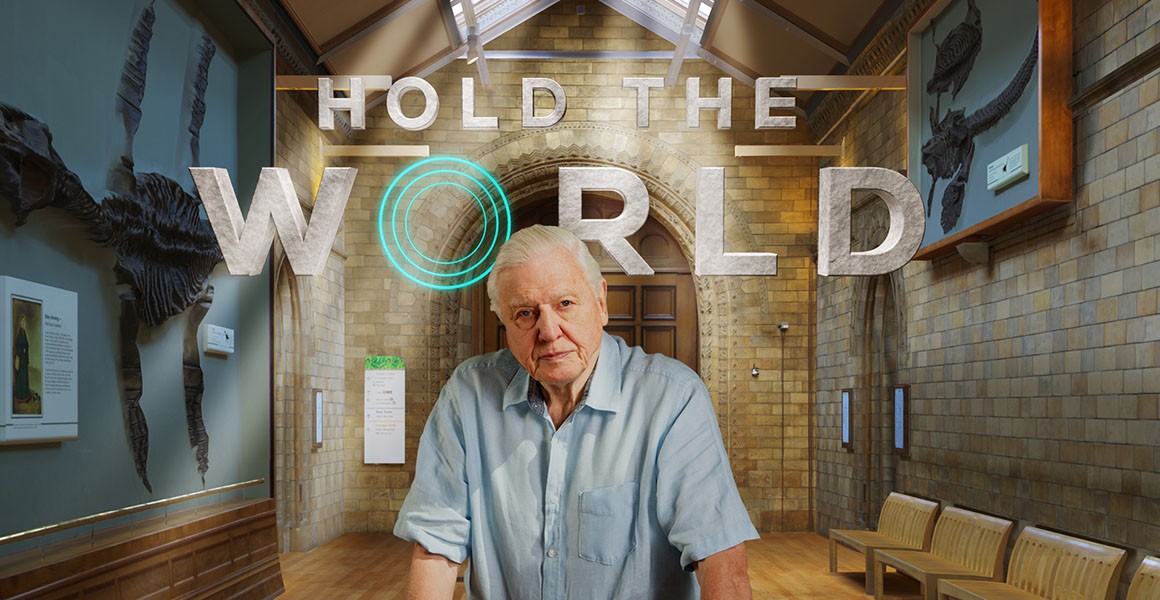
In 2018 the Natural History Museum in partnership with entertainment company Sky developed Hold the World,an educational VR experience that lets you come face-to-face with the one and only Sir David Attenborough. The interactive experience transports the viewer from their home to London’s Natural History Museum, where they can get their hands on rare specimens from its world-famous collection as they go behind the scenes to explore areas closed to the public.
When entering, viewers can choose from several locations in the museum, such as the Conservation Center, the Earth Sciences Library and the Cryptogamic Herbarium. In each of the locations, Sir David sits opposite the participant and invites them to examine several rare specimens, giving users a chance to learn more about the history and science behind them.
Hold the World is the first fully interactive production from Sky, using a combination of interactive video game and TV documentary technology. It is available to Sky customers as part of their customer loyalty program.
https://www.nhm.ac.uk/discover/news/2017/april/museum-to-star-in-sky-vr-experience-with-sir-david-attenborough.html
Microsoft: An American Supercar - Petersen Automotive Museum
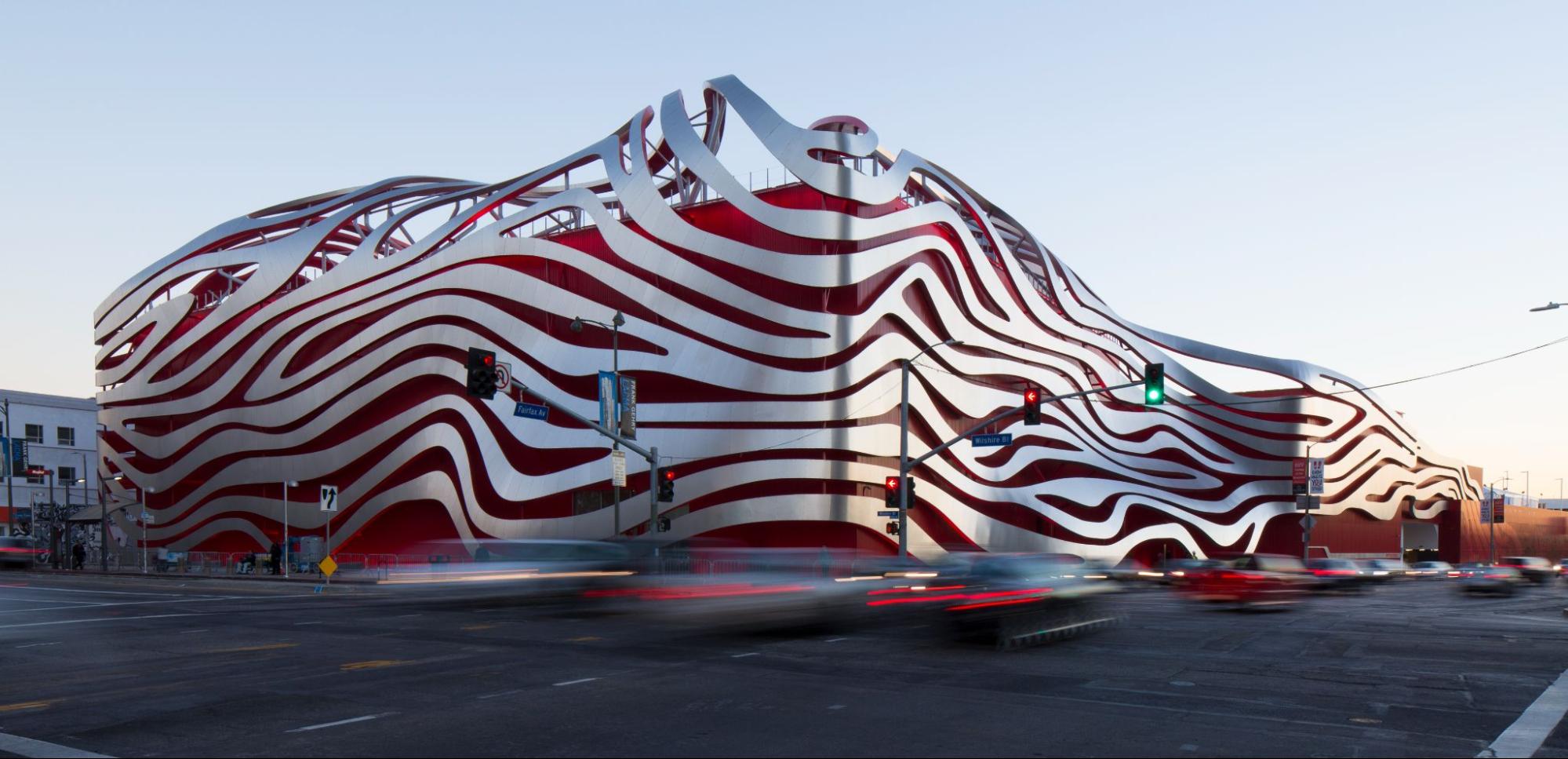
Although Microsoft technically is not a media organization, its collaboration with the Petersen Automotive Museum is still relevant. In 2017, the Petersen Automotive Museum in Los Angeles worked with Microsoft HoloLens to create the story and evolution of the Ford GT, from 1966 to 2017, in a mixed reality exhibit called An American Supercar.
This exhibit uses Microsoft’s mixed reality headset, the HoloLens, to overlay holograms onto two physical cars–both the original 1967 GT40 and the 2017 GT—parked side-by-side in the museum. Visitors can look through the body of the car to see normally hidden components, getting a better understanding of how they work and how they’ve evolved over decades of engineering innovation. For the HoloLens, engineers at app design and development firm Zengalt took actual museum floor plans, virtual Ford GT cars, and photos to recreate the space to precision. They then used spatial mapping, sharing, and sound to position the experience within the real world of the museum.
“We have thousands of objects in the museum, and one of the things you can’t do is touch them. Without touching them, it’s very hard to ignite your senses, get excited about them, and really learn about them because you’re only a spectator,” says Michael Bodell, Deputy Director at the Petersen.
In 2021, the Petersen Automotive Museum and Microsoft teamed up again for their Hollywood Dream Machines: Worlds Reimagined exhibition in collaboration with the Comic-con museum. For this occasion, they created an intimate tour of the legendary DeLorean Time Machine from Back to the Future.
https://inculture.microsoft.com/arts/petersen-automotive-museum/
Conclusion
There aren’t yet a lot of examples of how museums connect with public broadcasters. The cases that we found are pretty much exclusive to the United States.
Podcasts are a low-cost option that allows institutions to nurture an intimate connection with their audience and seems to be the most popular form of collaboration. When combining the expertise of a museum with the technical equipment and general reach of a public broadcaster it seems like the easiest way to connect the two. However, podcasts have been around for a good time now, and calling them innovative is hardly the case in 2022. How museums can use podcasts is an interesting extension to their brand, but with 3,2 million podcasts on Spotify alone, they aren’t really at the forefront of innovation.
There are more cases of how commercial media companies found a way to connect with cultural institutions. This isn’t a far-fetched revelation, since these companies are naturally more focused on generating economical revenue than public broadcasters. However, in our research it looks like public networks ask themselves the question: “how can we get art to people by using technology?” While media companies operate with the philosophy: “how do we get our technology to people by using art?” This doesn’t have to be true for every media company, but when reading that a part of The Met Unframed is only available with Verizon 5G, one could wonder if this project, rather than a pairing of content and distribution, is just a glorified ad campaign for the telecommunication company.
In conclusion, there is not a lot happening in Europe when it comes to innovatively connecting museums and media companies. Besides a few examples there aren’t a lot of representative cases. We can assume there are a lot of missed opportunities, but that also means there are still a lot of possibilities for European media.
Down below we listed a few interesting examples of innovative ways that art has been brought to a larger audience. They are not necessarily linked to media companies, but are inspiring nevertheless.
@lamgodsgezocht
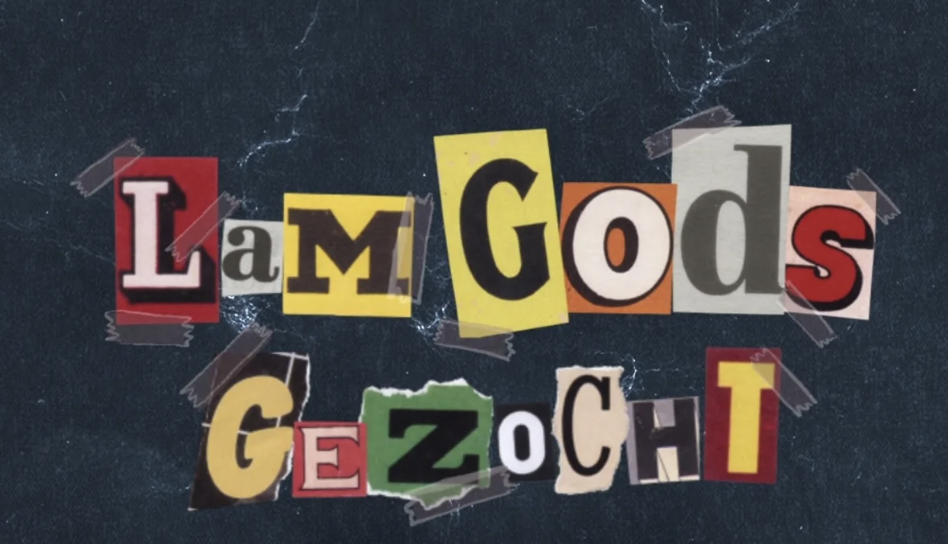
With @lamgodsgezocht, Studio JAS, in collaboration with VRT, found an innovative way of bringing art to younger audiences through Instagram Stories. The missing panel of Adoration of the Mystic Lamb is one of Belgium's biggest mysteries. Studio JAS calls this documentary a “whereisit” structured as a whodunit. The story is almost a hundred years old, but how @lamgodsgezocht tells it couldn’t be more contemporary. Going from moving paintings to TikTok trends and audience participation, it’s no wonder this project got nominated for a Jamie award.
https://www.instagram.com/lamgodsgezocht/
Van Gogh - The Immersive Experience
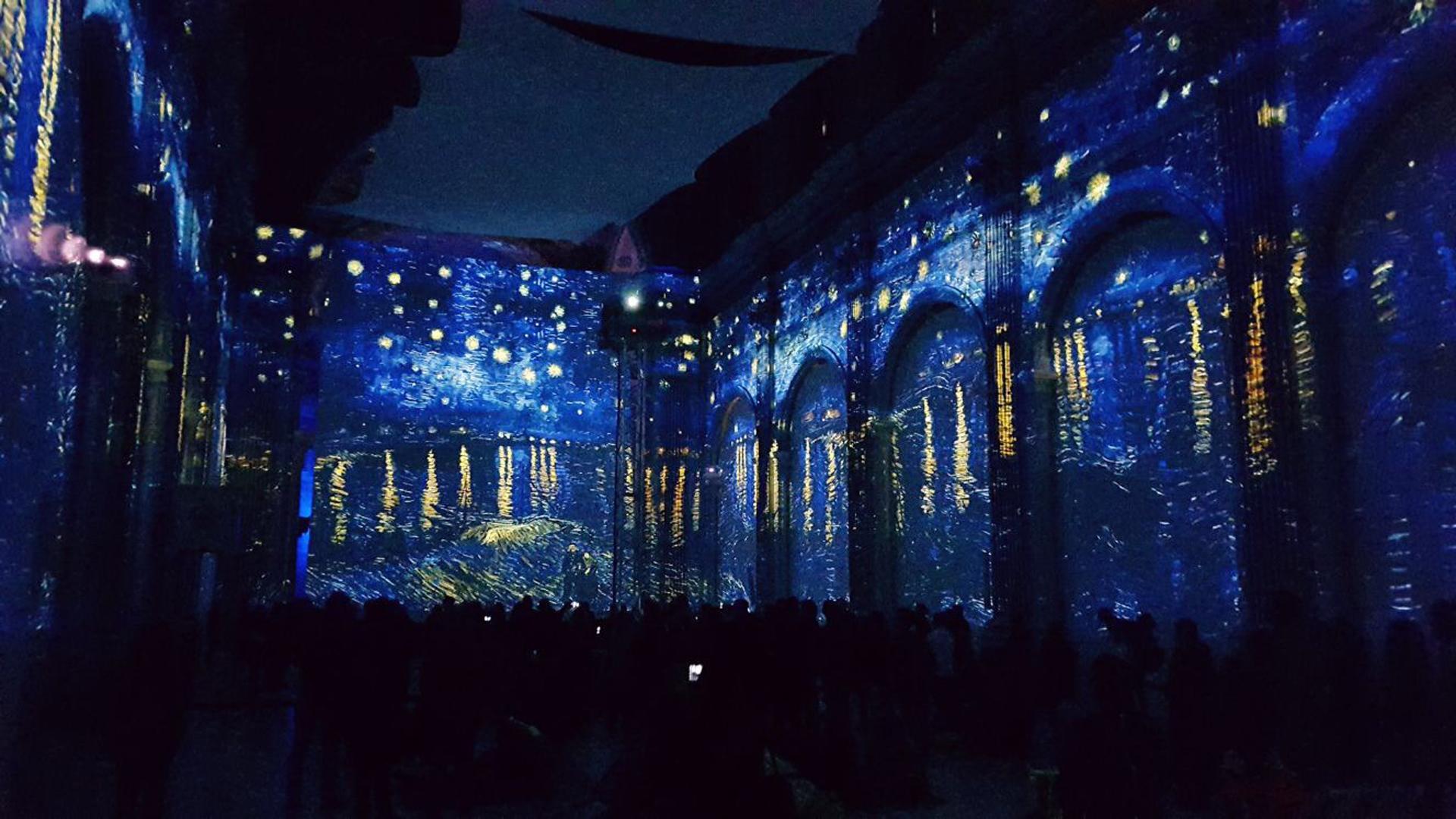
Chances that one isn’t familiar with the Van Gogh Immersive Experience are relatively small. The exhibition that has been touring since 2017 managed to find a new way to bring Van Gogh to an audience that wouldn’t normally feel the connection with a piece like The Starry Night. It is a miraculous experience for small children, but also an aesthetically-pleasing Instagram snapshot (not the most important thing when you visit a museum, but maybe the second most important) for audiences a bit older. Other companies have caught onto the magic of the immersive experience. For example, on the day that we are writing this article, Viva Frida Kahlo opens up in Brussels.
https://vangoghexpo.com/
NFT Showcase - MAS
In March of 2022, the MAS museum in Antwerp has a team of young curators that focuses on the question: “what is heritage, and what could be better?” As a promotional stunt for the second album of the rapper Yung Mavu and producer Chuki Beats, the artists created a soundtrack for 10 NFTs that was revealed together with the new album. Not only was this the first NFT-showcase in Belgium, it was also a great way to attract a new audience and embrace NFTs as a serious art form.

https://www.hln.be/antwerpen/jonge-rappers-stellen-nieuwe-plaat-voor-in-het-mas~a29650d4/?cb=69b2c7dcd71a668b449b7dc20b1bbd42&auth_rd=1
Story of the forest - The National Museum of Singapore
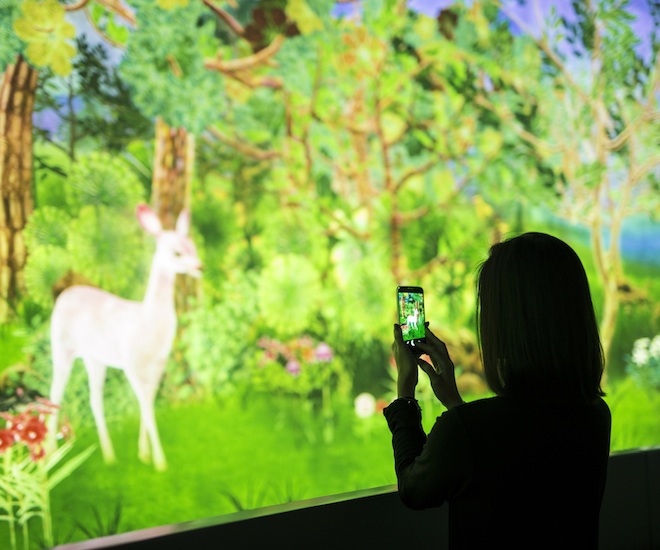
Story of the Forest focuses on 69 images from the William Farquhar Collection of Natural History Drawings. These have been turned into three-dimensional animations that visitors can interact with. Visitors download an app and can then use the camera on their phone or tablet to explore the paintings. The family-friendly installation uses technology to provide a learning experience. Much like Pokémon Go, visitors can hunt for and ‘catch’ items. In this case, these items are the plants and animals within the paintings. They can then add them to their virtual collection as they walk around the museum. The app shows more information about them once they have been collected. Users can learn facts such as habitat, diet and how rare the species are.
https://www.nhb.gov.sg/nationalmuseum/our-exhibitions/exhibition-list/story-of-the-forest#:~:text=Created%20by%20the%20renowned%20Japanese,Drawings%20into%20three%2Ddimensional%20animations.
Story:Web
Story:Web is an innovative idea to use existing technology to connect museum collections and publicly shared media to rewrite stories, grow them and make them personal, co-authored by museums and the public in general to stimulate thought and action. Story:Web uses metadata, artificial intelligence (AI) algorithms, and human-centered interfaces to link, visualize and produce sound from a dynamic and extensible web of data (text, audio, images, datasets) as Story:Snippets. Snippets can be linked in different ways, by different people and to tell different stories. This moves museum collections away from being assembled solely by professionals who privilege western stories and ideas with some objects distant from their source communities. By using Story:Web anyone can discover and link Story:Snippets. In this way, storytelling goes beyond the museum to enable diverse people and groups to tell stories that are seen through their values, culture and experiences.
https://storyweb.info/
#tussenkunstenquarantaine
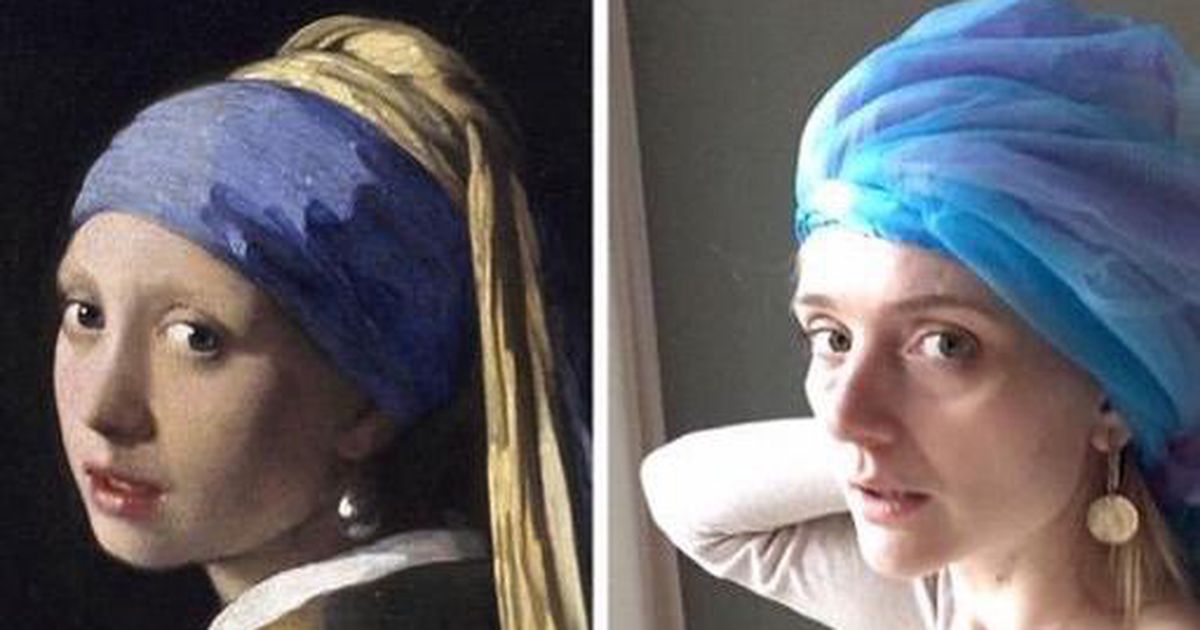
Another positive to come out of the global lockdown is #betweenartandquarantine, a Dutch Instagrampage that features real-life recreations of famous paintings. There are only two rules: use three household items and zero editing. #tussenkunstenquarantaine now has 252k followers, with people from all over the world participating. To support museums, the page adds the name of the painting, the artist and the museum where the original is found to the post. The #tussenkunstenquarantaine page is owned by Anneloes Officier.