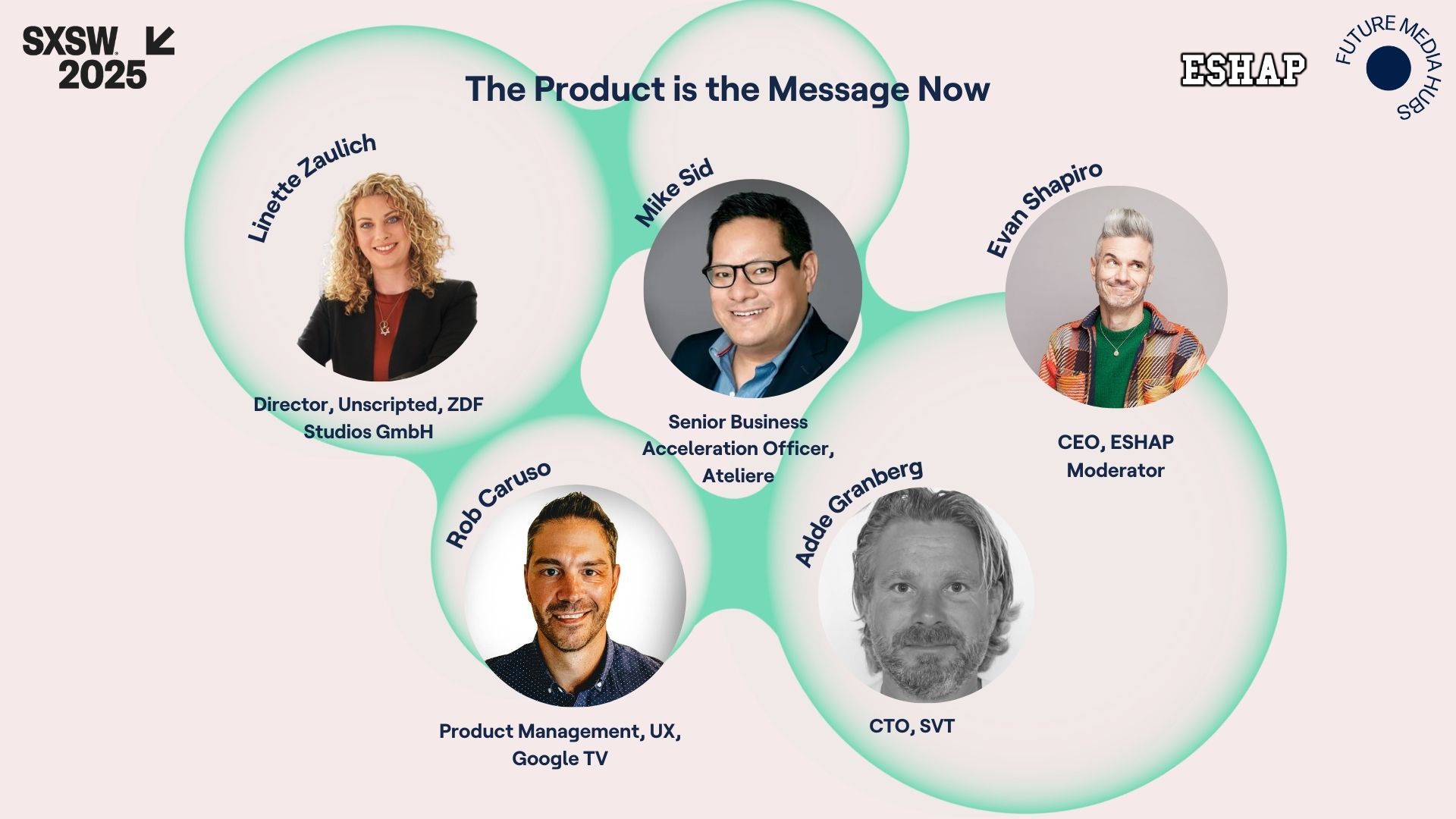
How the Product Became the Message

The media industry is falling behind. While technology has made content more accessible than ever, the way we produce, distribute and even how we measure success is stuck in the past. Streaming platforms still rely on clunky interfaces and TV networks cling to outdated business models. Meanwhile, apps like TikTok and Instagram have turned content discovery into a seamless experience.
The result? Audiences are overwhelmed. Instead of enjoying the endless entertainment we promised them, they’re spending over 110 hours a year just searching for something to watch. With so many choices and no clear path, they’re cancelling subscriptions, thinking they’ve run out of things to watch when, in reality, they’re just lost in the maze. Because content is no longer just about what we watch, it’s also about how we access it. The user experience and the platform have become just as important as the content itself.
This shift has left media companies scrambling for answers. At SXSW, a panel of industry experts offered insights into how the industry must evolve.
ZDF Studios: Changing the Definition of a Channel
When we think of channels, we think of traditional TV networks like BBC or CNN. But for younger audiences, especially kids using YouTube, a channel isn’t a fixed brand. When Linette Zaulich, Director Unscripted at ZDF Studios, hears her eight-year-old son talk about a channel, he is actually talking about a search word. The recommended videos become his version of a "channel." This means that the content itself matters more than the platform it's on.
Linette shared data showing that on YouTube, the majority of views (81% in the case of ZDF Studios' most successful documentary channel) come from recommendations, not from people visiting the channel or subscribing to it. In that particular case, only 1% of views actually come from subscribers. This proves that traditional marketing strategies, like focusing on subscriber growth or branding a channel homepage, are all less relevant than the algorithm.
To trigger the algorithm, it is more important to create notable thumbnails, interesting video titles, and encourage people to engage in the comments. Linette gave the example of a YouTube Short about an anaconda’s eating habits that went viral—not because of the content itself, but because users started discussing an unexpected detail: the giant fly in the frame. This viral moment led to 4.5 million views on a full-length documentary that had been gathering dust for 20 years. This anacondadote shows how audience behavior is unpredictable, and that success is often about leveraging engagement rather than carefully curating an image for your brand.
SVT: The Challenge for Public Service Broadcasters
Public service broadcasters have a mission beyond chasing viral success. But with audiences increasingly fragmented across different platforms, how can they reach new viewers and uphold the values of a public service broadcaster? Adde Granberg, CTO Head of Production at SVT, has a clear vision: public broadcasters need to stop clinging to old ways and instead go to where the audience is, whether that’s YouTube, TikTok, or other emerging platforms.
According to Adde, we might also want to consider the idea that “high-quality” TV doesn’t necessarily match what an audience values. Many popular YouTube creators don’t follow traditional broadcasting standards and still attract massive viewership. Does this mean that public broadcasters may need to redefine what “professional” content looks like? A whopping 1 billion people, for example, now watch podcasts on their television.
Moving to third-party platforms is not without practical and philosophical challenges. What about the fact that a public service broadcaster is not allowed to sell advertising? Or how do public service broadcasters ensure that they get the proper “cultural currency” in return for their high-quality content? And how do you convince internal decision-makers, who might be emotionally resistant, to embrace these platforms?
The solution to these questions is not an easy one. Although everyone agrees that a shift has to be made, there is no concrete answer (yet) on how to solve discovery issues or navigate platform dependencies. In the future, public service broadcasters need to look for concrete strategies on how to execute this shift.
Google TV: How Do You Value a TV User?
Google TV’s Director of Product Management and UX, Rob Caruso, pointed out that a decade ago, watching TV was simple: you pushed a button, and something was just there. Now, users have to actively choose what to watch from an overwhelming number of options. While at first, personalized recommendations were supposed to help the viewer, platforms have now started prioritizing their business goals over giving the audience what they want. This leads to a worse experience for the viewers simply because the system is not optimized for them—it’s optimized for profits.
The TV industry has changed drastically over the last ten years. Before, the hardware-first model was simple: sell as many TVs as you can at a good profit margin. But now, with a new model of services and ads, manufacturers only start making money after the sale. And with TV sales dropping massively over the past decade (thanks to smartphones and tablets), the margins on hardware sales are now razor thin. To compensate, manufacturers have shifted toward recurring revenue by monetizing users through advertising and content deals. Samsung, for example, sells ad space on their TV home screen.
Google TV isn’t a hardware company—it’s an operating system that runs on multiple TVs and streaming devices (like Chromecast). So, unlike traditional television manufacturers, Google doesn’t need to make a profit on each TV sold. Instead, Google benefits when people use Google services (YouTube, Search, etc.) on their TV. This actually puts them closer to companies like Apple and Amazon, who also operate within an ecosystem of devices (like how Apple TV+ connects to iPhones and iPads). 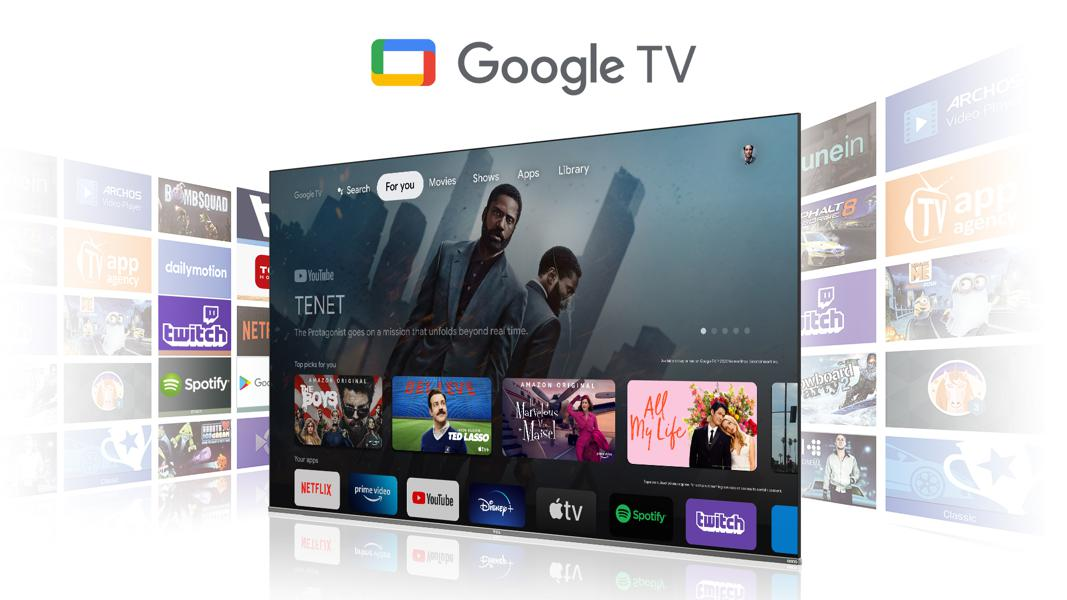
Google TV
Now, every company is trying to figure out: “how much is a person using my platform worth?” For TV manufacturers like Samsung, the equation is: how much money can I make from ads and partnerships? For Apple and Amazon, it is: “how many services can I integrate into a user’s life?” For Google, Rob explained that their approach is different because they don’t just look at revenue per user. They factor in the broader ecosystem: if you use Google TV, you might also use YouTube or Google search. This means that Google can afford, to a certain extent, to make less money directly from TV, as long as you stay within their ecosystem.
The big takeaway here is: if any of these companies over-monetize—meaning they sacrifice user experience to maximize their profit—then the consumer ends up with a bad experience, and the whole system becomes broken. In the end, the challenge is about finding a balance between the content owners (streaming services and TV networks), the distribution pipeline (Google TV, Apple TV, Roku, etc.), and the audience (who just want a smooth experience with good recommendations).
Ateliere: The Shift in Media Production and Distribution
Content distribution used to be simple: a TV network commissioned a show, which aired on a set schedule. Today, content must be adapted for multiple platforms simultaneously: a full episode may air on a network or a streaming service, and at the same time, clips must be repackaged for YouTube (short-form content, trailers), TikTok (even shorter viral moments), FAST channels (free ad-supported streaming TV), and Instagram Reels or Facebook. This means that content isn’t just about one big show anymore—it’s about multiple pieces of content spread across different platforms.
For media companies that still rely on outdated systems built for a world where content was produced for just one or two platforms, this has created a challenge. If a TV moment goes viral, but the company takes too long to repackage and upload relevant content to social media, they miss the engagement window. Besides that, producing content in multiple formats requires more resources—it’s simply more expensive. As a result, media companies are facing pressure to modernize their workflows and ensure that high-quality content reaches audiences as fast as possible.
Reality TV is a good example of how social media fuels engagement: clips from The Bachelor or Real Housewives are frequently shared online, sometimes becoming even more popular than the episodes themselves. This means that media companies must think beyond just producing a show and create additional content that fits different platforms.
To understand this issue better, Mike Sid, whose consultancy Context Science advises Ateliere Creative Technologies, told us about the cloud-based software that provides production and distribution tools for media companies. One of Ateliere’s products, Ateliere Connect, allows companies to manage the delivery of content across different platforms efficiently by integrating cutting-edge Generative, Multimodal AI, and machine learning technologies into the cloud-native media supply chain platform. Another of their products, Ateliere Live, is focused on software-based live production, replacing expensive traditional broadcast equipment.
While Ateliere is one solution, the broader takeaway is that cloud-based production and automation are becoming increasingly necessary for media companies to keep up with demand. Because the way content is created and distributed has fundamentally changed, companies need to adapt today, content must be designed for multiple platforms from the start. Because success isn’t just about how many people watched a show—it’s also about how well content spreads across different formats and platforms.
Conclusion: The Future of Content
We are standing at a crossroads where content is no longer just about what we watch. While streaming platforms and broadcasters fight for audience attention, social media algorithms have redefined discovery, making traditional branding and subscriptions less relevant. For public service broadcasters, this shift is quite a challenge. Their mandate to provide culturally relevant content to the public clashes with the reality of how that audience consumes media today. Public broadcasters must find a way to maintain their values while also adapting to these new behaviors. Watching from the sidelines and waiting for people to come back is not an option.
Meanwhile, the economics of TV have also transformed. Companies like Google, Apple and Samsung are no longer just selling devices, they’re investing in entire ecosystems where the long-term user engagement fuels their revenue. However, they are tiptoeing on a fine line: if monetization comes at the cost of user experience, audiences will disengage. Platforms must generate returns without making content discovery an exhausting chore.
Finally, media production itself has changed. A single piece of content is not enough, it must be repackaged for different platforms in different formats. Companies that rely on outdated workflows risk falling behind.
The future will depend on how well we can navigate these shifts. We have to embrace discovery-driven engagement while at the same time balancing monetization with the user experience. We need to create a true win-win ecosystem, which we don’t have today. Or with the words of Rob Caruso: “One way or the other, content is an ecosystem. It just needs to find a balance.”
To delve deeper into these discussions and gain valuable insights, watch the full session here.