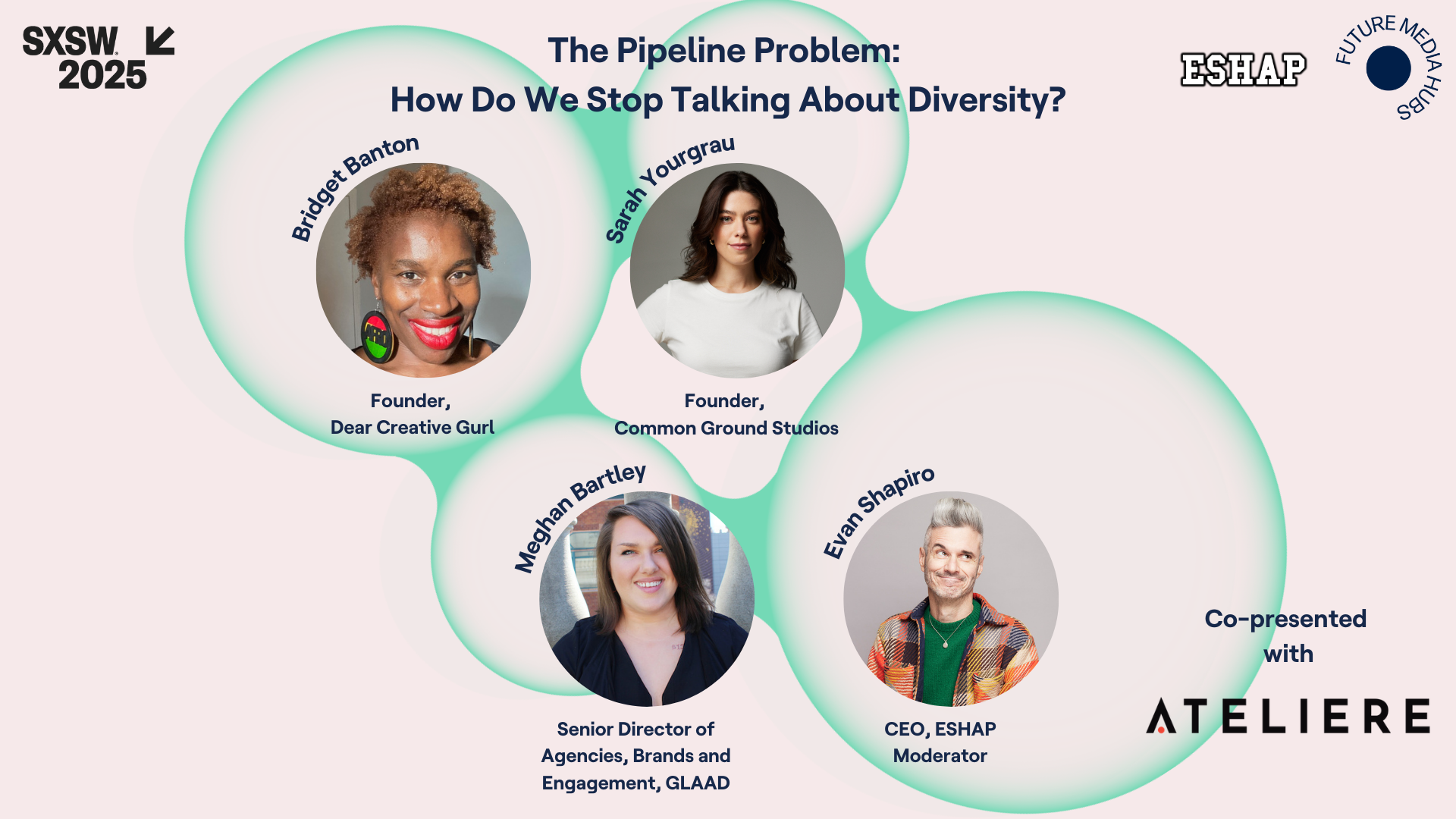
The Pipeline Problem: How Do We Stop Talking About Diversity? - Moving Beyond Talk to Action

Although the global workforce is more diverse than ever, in media and advertising, the decision-makers still look the same. Is the pipeline problem - the idea that there aren’t enough qualified candidates from underrepresented groups in the talent pool to achieve diversity goals - really the issue? Or is it just an easy way to justify exclusion?
The numbers tell a stark story. In 1998, women held just 17% of top roles in the highest-grossing films in 1998. By 2024? Only 23%. Decades of ‘progress’ for a 6% increase. In the nearly 100-year history of the Academy Awards, only nine women have ever been nominated for Best Director and at the prestigious Cannes Film Festival, only three women have ever won its top prize, the Palme d’Or. If women make up half the population, why are they still so absent from the industry’s biggest decision-making seats?
Beyond race and gender, economic privilege also remains an overlooked barrier. Breaking into media often requires unpaid internships and exclusive networking circles—advantages that many simply don’t have.
Meanwhile, as companies publicly distance themselves from DEI (Diversity, Equity, and Inclusion) initiatives, the question we’ve been asking for a long time remains: How do we continue to push for real change? And will we ever be "done"?
GLAAD’s Role in Corporate Advocacy
GLAAD is a media advocacy organization that has long worked to ensure fair and accurate LGBTQ+ representation in Hollywood. In the last few years, the nonprofit has also expanded its efforts into the corporate world, recognizing that media visibility alone isn’t enough to drive social progress. Meghan Bartley, GLAAD Media Institute’s Senior Director of Brand Engagement, emphasized that corporate inclusivity efforts are not just about ethics or representation. Because when companies invest in diversity, they are investing in their consumer base.
LGBTQ+ visibility in corporate spaces matters for a lot of reasons. Studies show that the more non-LGBTQ+ people see the LGBTQ+ community represented positively, the more likely they are to become allies. This is more important than ever, given the rise of anti-LGBTQ+ legislation threatening people's rights.
But besides the social impact, visibility also creates economic impact: LGBTQ+ people are a growing market. 23% of Gen Z identifies as LGBTQ+, making this one of the most influential consumer demographics. Besides that, 10% of the U.S. and 9% of the global population also identify as LGBTQ+. When brands think about their long-term growth and ignore these numbers, it’s not just exclusionary, it’s simply bad business.
Meghan presented a case study about Target, and how the brand’s shift in corporate strategy backfired. For years, Target built a strong reputation as an ally, making its stores a welcoming place for both LGBTQ+ consumers and minority-owned brands. The company even became a major sponsor of the Minnesota Pride Parade, a symbolic move showing its commitment to the LGBTQ+ community.
In response to rising political backlash, some companies, including Target, began scaling back their public DEI commitments. With this, Target was trying to avoid backlash from conservative groups that opposed DEI efforts while at the same time trying to maintain its growth market of LGBTQ+ consumers and minority shoppers. For years, Target built trust with LGBTQ+ consumers, until it backed away the second things got tough. The result was a backlash that cost the brand both credibility and revenue, because consumers are increasingly voting with their wallets.
Studies show that 58% of LGBTQ+ consumers had already pulled back spending from brands that they felt were not authentically supporting the community. If you calculate 58% of the LGBTQ+ community’s $1.4 trillion spending power, that means $812 billion in consumer dollars is in flux. This shift isn’t exclusive to LGBTQ+ consumers. Black consumers ($1.7 trillion in spending power) and Hispanic consumers ($3.4 trillion) are also highly attuned to brand authenticity when it comes to DEI.
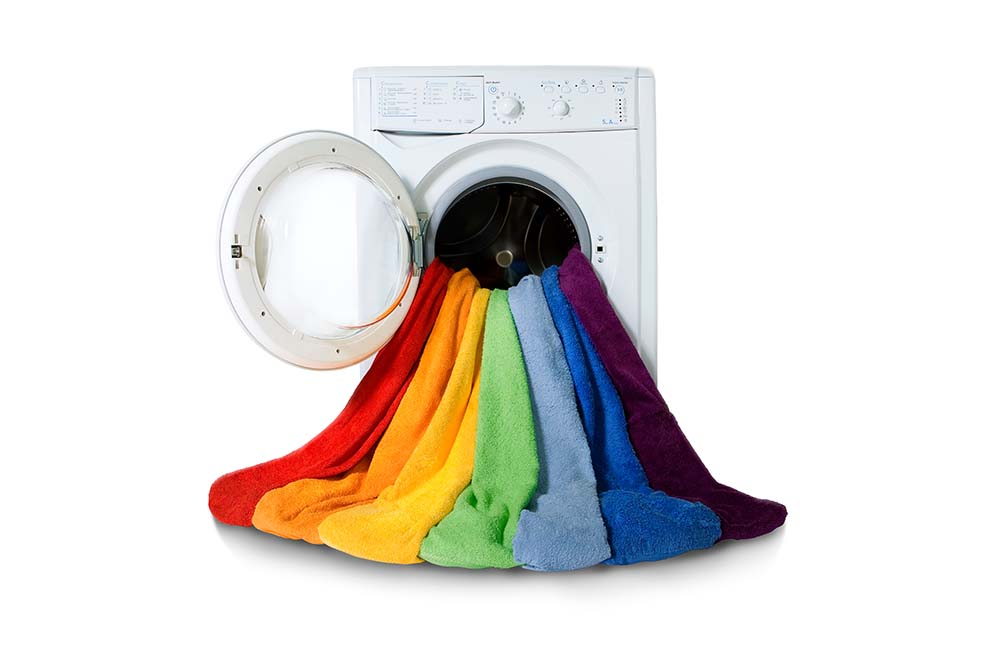
Rainbow-washing
There are some larger lessons to be learned from Target’s situation. First of all: authenticity matters. Many brands have been accused of “rainbow-washing”—putting up rainbow logos, selling merch, and displaying LGBTQ+ messaging during Pride Month but failing to back up their support during the rest of the year. Consumers are increasingly sceptical of brands that seem to performatively support the LGBTQ+ community only when it’s convenient. Secondly, Target’s actions suggest that no one in their leadership calculated the true cost of losing LGBTQ+ consumer trust. Companies need to do the math and recognize that DEI isn’t just about ethics, it’s about financial growth.
Brands need to choose their priorities: consumer trust or risk mitigation. If they don’t stand by the communities that actually drive their revenue, they will pay the price—both financially and reputationally.
Common Ground Studios and the Collapse of Traditional Power Structures
Sarah Yourgrau, founder of Common Ground Studios, uses media as a tool to drive behavioural change at scale. Her main goal is to build bridges between divided groups. One of the biggest shifts Sarah has observed in the last six months is the crumbling of traditional power structures in media and business.
Historically, large institutions held public trust and were the primary arbiters of information. But this trust has radically diminished, and people no longer look to big companies to shape culture, they look to their peers instead. As a result, brands that once dictated narratives are now playing catch-up, realizing that they must engage with creator-driven ecosystems to stay relevant. That’s why Common Ground Studios goes straight to the audience, to YouTube.
YouTube has become the most trusted media platform for many audiences. Unlike traditional media, it removes gatekeepers, allowing creators to speak directly to the audience. It’s also the perfect platform to create long-form content, giving space for deeper storytelling.
One of Common Ground Studios’ most exciting projects right now is “People You Should Know”, a series where local heroes and community change-makers are highlighted. The explicit goal is to create an ecosystem around the project, bringing together brands, creators, and the audience in a way that feels both authentic and mutually beneficial.
Instead of relying on traditional corporate sponsorship models, they’re designing a hybrid approach that includes YouTube monetization, strategic content distribution across multiple platforms, and direct brand partnerships that are tied to social impact, creating a win win situation for everyone involved.
Dear Creative Gurl: The Gatekeeping Problem
Bridget Banton is the founder of Dear Creative Gurl, a creative consultancy that specializes in unlocking creativity, strategy, and producing world-class content. Bridget has built a twenty-year career with creativity at its heart, and she knows a lot about managing profitable companies and producing content that delights the audience. Time and time again, the key ingredient to creating something successful comes back to: you need the best people, no matter where they come from.
Coming from a working-class background, Bridget’s journey into television was rather atypical. As the first in her family to attend university, she had to navigate an industry that remains overwhelmingly middle class, making it difficult for those from different socioeconomic backgrounds to enter. Having held senior leadership roles at media companies like Paramount, BBC, Penguin Random House, and Channel 4 before founding Dear Creative Gurl, Bridget has firsthand seen that it’s not just companies shaping access to the industry; it’s hiring practices within media that remain a key barrier for people who aren’t predominantly middle class. That is why Bridget passionately shared with us the need for a change in recruitment.
This ties back to ‘The Pipeline Problem’: if aspiring media professionals can’t get their foot in the door, how can they ever break into the industry? Because when you want to work in television, one of the biggest barriers to entry is the problematic hiring process itself. Unlike other industries with clear hiring policies, in media, jobs aren’t publicly posted. They’re talked about over coffee or granted to people already working within a company.
It doesn’t get better the higher up the corporate ladder you go – it gets worse. Television is an industry that relies on networking, a privilege that people who don’t have access to prestigious internships or expensive universities are often not afforded. Bridget says that a lot of her success simply has come down to the fact that she has seen opportunities posted publicly and that she has applied. In 2012, Bridget applied for a job as a commissioning editor at the children's department of the BBC and got it—something that is the exception rather than the rule.
To create a more inclusive system, these exclusionary practices need to change. This can be done by creating opportunities for true competition and posting all job applications online. Because if a role exists, it should be accessible to all qualified candidates.
In an industry that employs in their own likeness, the decision-makers must take on more responsibility in shaping a diverse workforce. And although many aren’t actively trying to block access, good intentions don’t change outcomes. True inclusion that makes an impact on scale is something that everyone has to take on. It means removing barriers, not just recognizing that they are a problem.
Towards the end of the panel, a major industry shift to break down economic barriers to entry was suggested by the audience: eliminate the need for a bachelor’s degree, since 62% of Americans and 57% of Europeans do not have a college degree, and the requirement of this very expensive piece of paper is one of the biggest unnecessary barriers to hiring diverse talent. Instead of filtering applicants solely through credentials, companies should focus on training the right person for the job.
Conclusion
The truth is that DEI efforts often preach to the choir. The real challenge is engaging decision-makers—who are overwhelmingly cisgender, heterosexual men—with the reality that inclusion isn’t charity; it’s strategy. If companies continue to treat diversity as an optional initiative rather than a core business priority, they risk losing revenue. The backlash against brands like Target proves that half-hearted commitments to inclusivity damage trust and that consumers are paying attention. Companies that build teams reflecting their consumer base don’t just “do the right thing”; they reach wider audiences and set their brands up for the future.
But representation isn’t just about branding. It starts within the workforce itself. If we want to change who these decision-makers are to reflect the real world, the problem isn’t a lack of diverse talent; it’s who gets access to opportunities. The industry’s reliance on unpaid internships and bachelor’s degrees filters out working-class and marginalized candidates before they even get a chance to compete. Companies must work harder to implement a transparent hiring process to build a workforce that reflects society as a whole.
Diversity isn’t a feel-good initiative; it’s a business necessity. Organizations that fail to reflect their audience will lose them. The question isn’t if change will come, but whether these institutions will survive it.
To delve deeper into these discussions and gain valuable insights, watch the full session here.