When in London… Must see companies for every media innovation enthusiast.

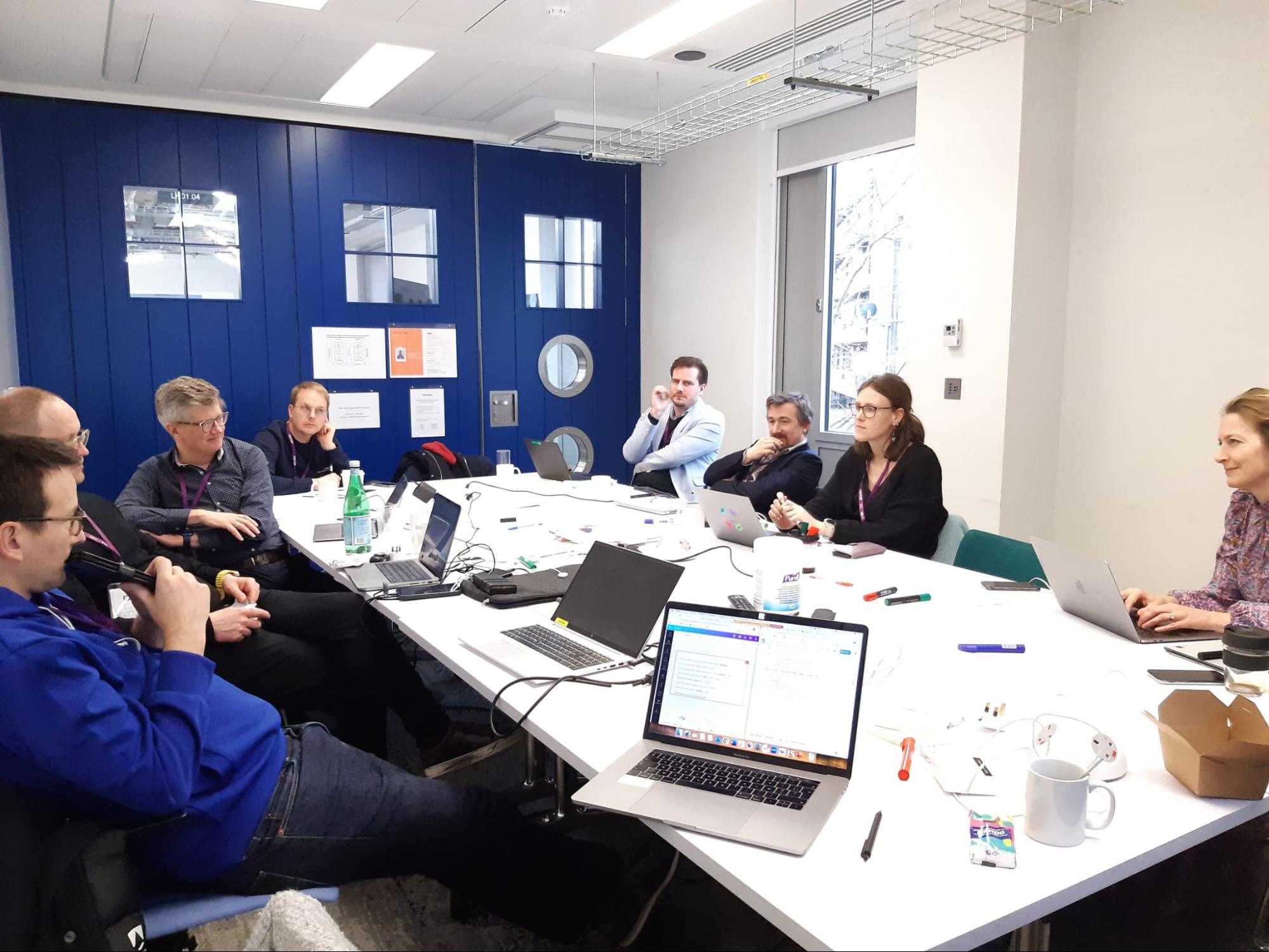
On February 15th, BBC welcomed the Future Media Hubs Advisory Board for a two-day strategic meeting in London. Workshops about the work and role of the Advisory Board were alternated with visits to top media innovation companies based in London. The group visited not only BBC, but also virtual production studio’s Film Soho and Final Pixal, got a tour at the famous Abbey Road Studios and we even got a very insightful presentation from Omdia. We’ll tell you all about what we’ve learned in this article!
The Advisory Board
To determine the long-term strategy of Future Media Hubs, a board was set up in 2020. The board consists of key people in both public and private media. At the core of the long-term strategy are two important goals: reinforce and influence media innovation and make Future Media Hubs a strong international community of European public and commercial media organisations. This is done by setting up different action plans for the Advisory Board members with a focus of benefiting the different hubs and the whole media ecosystem. For example, the Board can help with EU lobbying and finding new funding opportunities for Future Media Hubs and its members.
Film Soho and Final Pixel
The first visit on the London agenda was Film Soho: a group of innovative brands located in the city centre and entertainment district of Soho. You can find everything you need in the film and TV production process here: while Soho Talent co-produces content with established actors, Captain Dolly is their own in-house production company. Virtual production is done by V-studios, the very first in Soho with krADR being the largest dedicated ADR sound stage in that area. Post-production facilities are the specialty of Film Post and Studio Soho Distribution makes sure that the UK and international sales are a success.
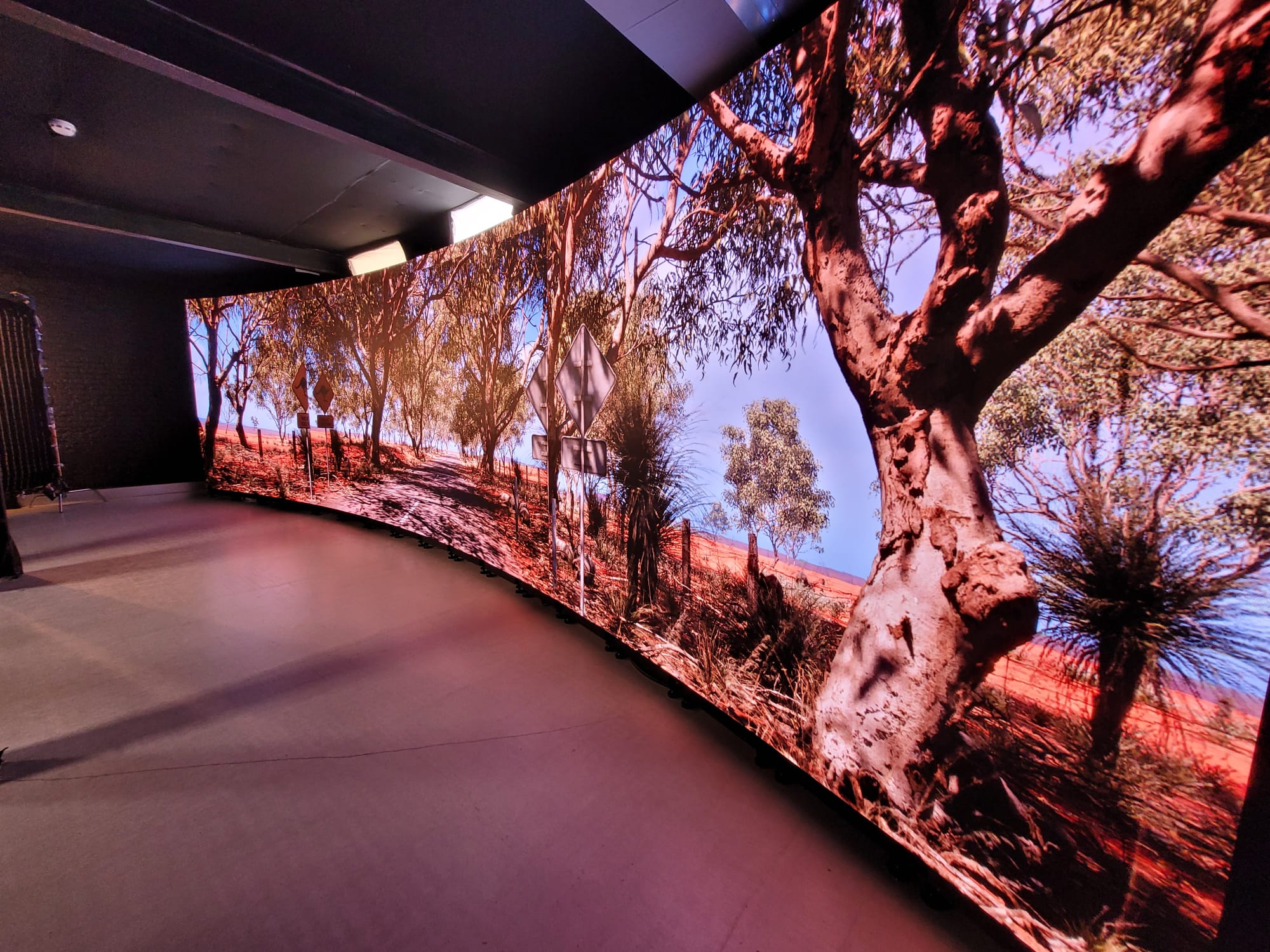
While standing in V-Studios, Annabel Martin, Director of Operations at Film Soho, explained that virtual production can be used for promos, music videos and stills. Different applications are needed, but doing Mandalorian stuff doesn’t mean that big budgets are necessary. You can use virtual production easily as a tool in your own film productions and this is also more sustainable and cost-efficient than travelling to different places. With Disguise and Unreal, volumetric production has made a big evolution in connecting the physical and digital world and in creating any landscape you want in AI while augmenting it.
Global virtual production house Final Pixel also works in this area. With clients such as Disney, ABC and Oracle Red Bull Racing, they create 3D, photoreal and cinematic worlds while using real world sets. Important at Final Pixel is that clients do not start a project with a specific VP stage in mind. The different teams actually help create and find tailormade technical solutions for your individual projects and their creatives.
“Virtual production is not just a tool, it is a way of producing.”
Michael McKenna, CEO and Co-founder at Final Pixel
In their London base, located on 180 Strand and home to film and TV makers, advertisers and creatives, Final Pixel showed us the 180 Virtual Production Studio with brand new and cutting edge technology. The stage, for example, is built of corner 4K screens, created with sophisticated LED lighting systems replicating colours in the RGBW spectrum - meaning the colour red is not filtered out, giving the actors a more natural look. The background can be Unreal Engine full 3D, Video, Stills or even 2.5D. Recently Final Pixel have been testing background environments created with AI with the use of an Unreal plug-in and by doing this they are able to generate background images for virtual production in less than 4 seconds.
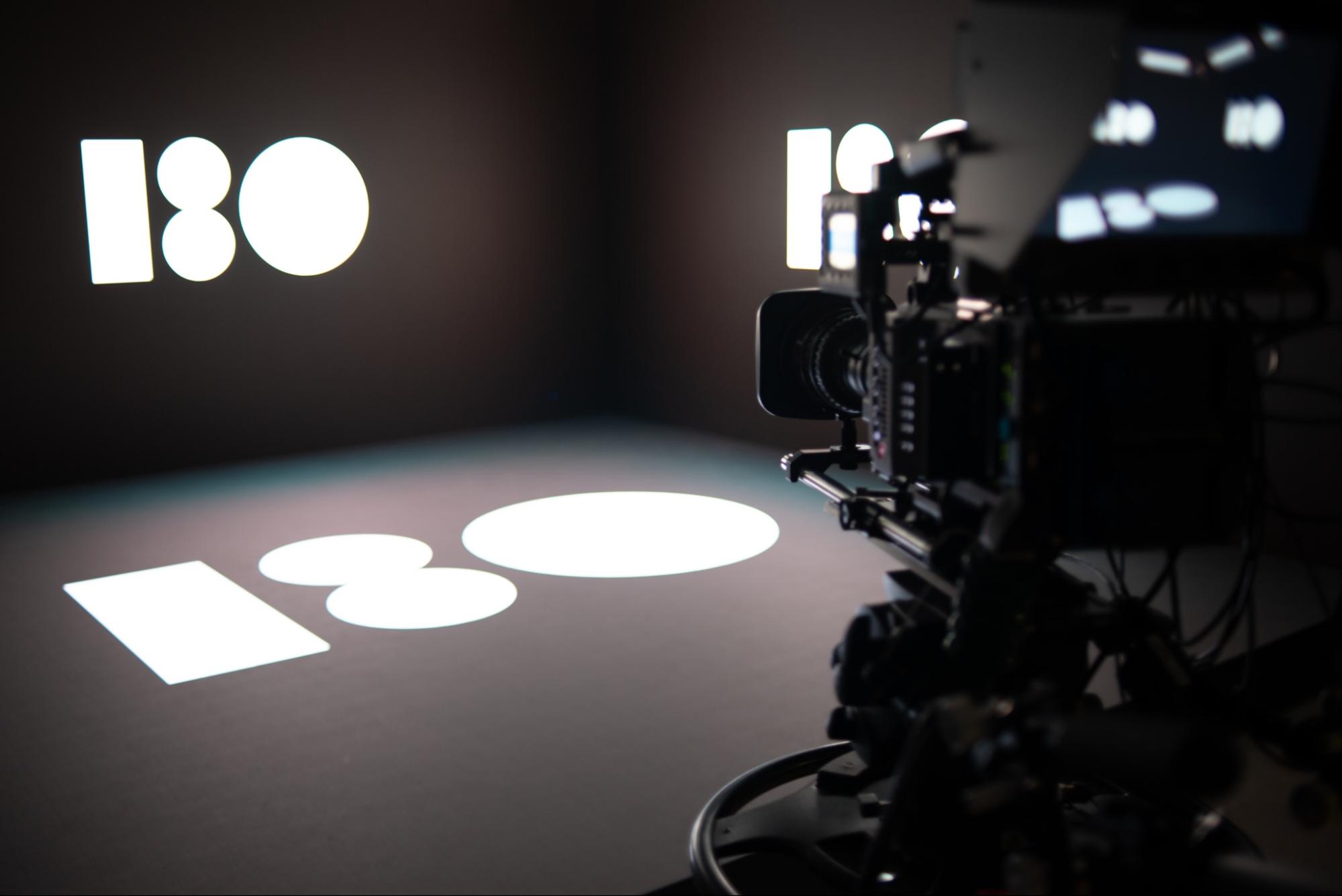
Next to two other offices in New York and Los Angeles, there is also the Final Pixel Academy where you can learn virtual production techniques and skills from your own home. With their Academy, Final Pixel can give back to the industry so the whole media ecosystem can benefit.
Abbey Road Studios: The music industry is blooming, and we’re not only talking about Podcasting
A must see on the music agenda was Abbey Road Studios, the studio where legends like The Beatles, Shirley Bassey, Pink Floyd, Kate Bush and Oasis recorded their music and newer artists like Sam Smith, Stormzy, Little Simz and Frank Ocean still do. It was not easy, but we were able to get a small tour during their very busy schedule. Because after three years, it was time for the ‘Abbey Road Red Demo Day 2023’ on Tuesday February 22nd.
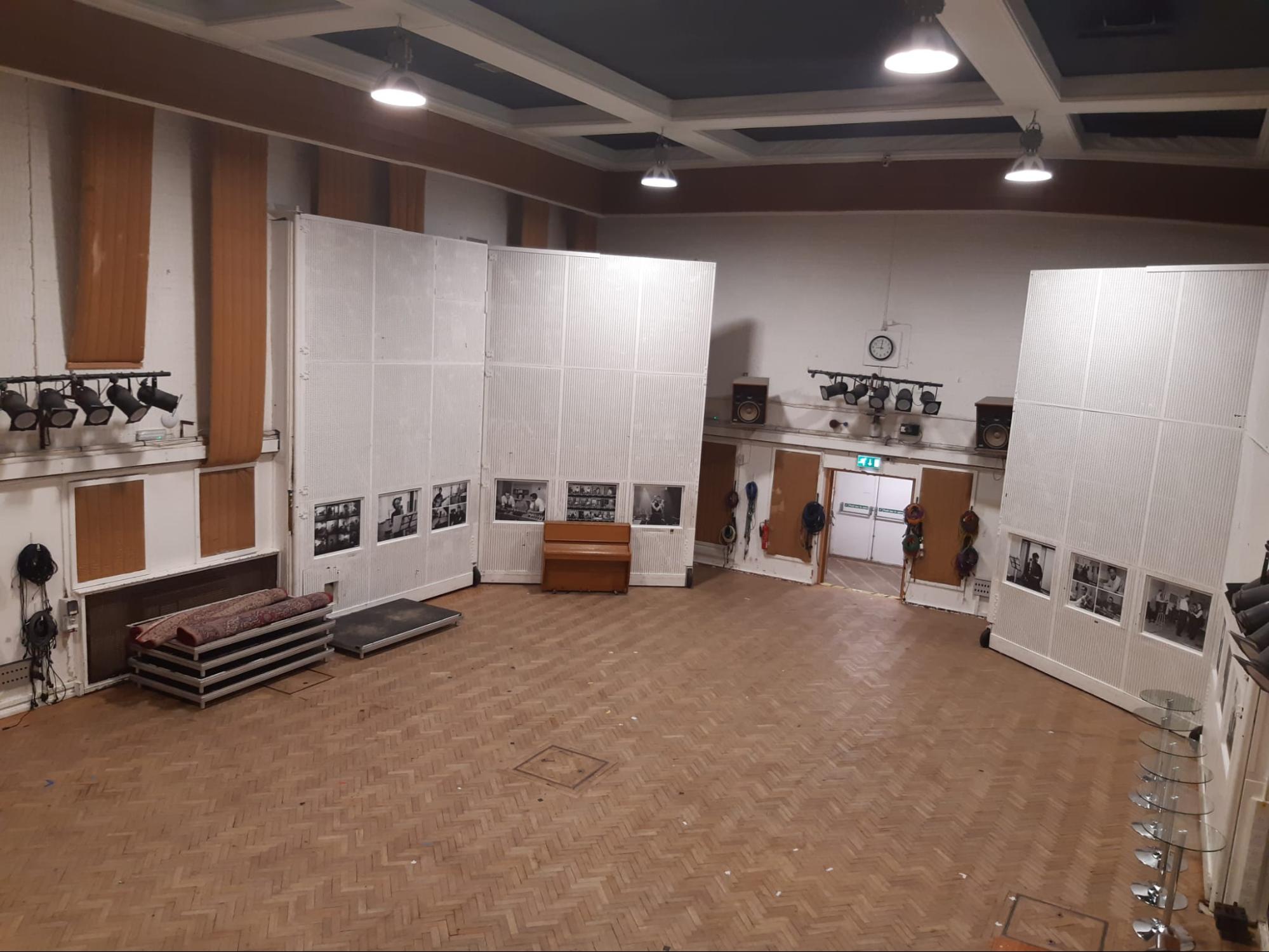
Karim Fanous, Innovation Manager at Abbey Road Studios, started his tour by showing us the original deed which dates from 1929 when an old English town house was bought for its 22 thousand square feet garden. Now, around a hundred people are proud to call this their workplace. The building still hosts the original three studios, alongside a further four studios which have been added in recent years. We took a look and studio 3 for example is the place where The Beatles changed their sound and recorded their album Revolver, where Pink Floyd recorded two albums (TDSOTM and Wish You Were Here) and Florence + The Machine their album Ceremonials. Studio 1 gives you the old gymnasium feeling and some of the greatest cinematic music of the last 40 years was produced here. From Raiders of The Lost Ark, The Lord of The Rings and The Hobbit trilogies, many of the Harry Potter and Star Wars movies to Black Panther, Avengers: Endgame and Tar. Lastly, Studio 2 still has the original split level design of the early days.
In addition, there are five mastering rooms, a dedicated Dolby Atmos Music Mastering suite and a Dolby Atmos Mix Stage where the final sound dub for film is created. With techniques like this, Abbey Road Studios is leading the edge in the music industry.
To stay on the topic of Audio, we had a chat with our friend Sam Bailey, Managing Director at The Radio Academy and panel speaker of our Slush Audio Networking Event of 2022. He has been a busy man with the Radio Academy ARIAS (Audio and Radio Industry Awards), also known as the former Sony Awards. With a focus on UK based audio and radio shows, the ambition of the ARIAS is to become the Oscars of the radio industry. With over a thousand entries, 220 judges are now selecting the nominees for the 28 different categories. Nominations will be announced on March 30th and the Awards Ceremony will take place on May 2nd. More info about the ARIAS can be found on https://www.radioacademy.org/arias/. These awards also raised the question if there is a market for an international radio award scene? Awards would be based on the concept, but language issues still remain a difficulty.
London is also the city of the first dedicated Masters in Podcasting in the UK. Working with key people and organisations in the media environment, this MA focuses on the skills you need for the whole production process in audio, video and social media. Topics such as design, marketing and business planning are also taught. Many important players were around the table to consult on course content for this master's degree and to make sure the program is diverse and open to everyone. People can now apply to start full- or part-time in September 2023 on
https://www.city.ac.uk/prospective-students/courses/postgraduate/podcasting.
Together with this MA, a Centre of Podcasting Excellence was established to hold monthly events. Brett Spencer, Director of the Centre, ex-BBC Sounds and former Digital Content Director at Bauer Media, gave us more information about the podcasting world. Podcasting is a fast growing sector in the UK, but the average person only has 27 apps on their phone. In order to get people to listen to your podcast on a new app, you first have to make sure that people will download it. “If you are restricting content to your app only, creating a walled garden, you are immediately only going to reach a smaller percentage of the market.” This instantly limits the range of success when launching new content. But it all depends on the dominant players in the market. For example, Spotify and Apple are leaders in Europe, but not so much in India. Still, podcast listening is a growing number around the world.
BBC news & demo’s
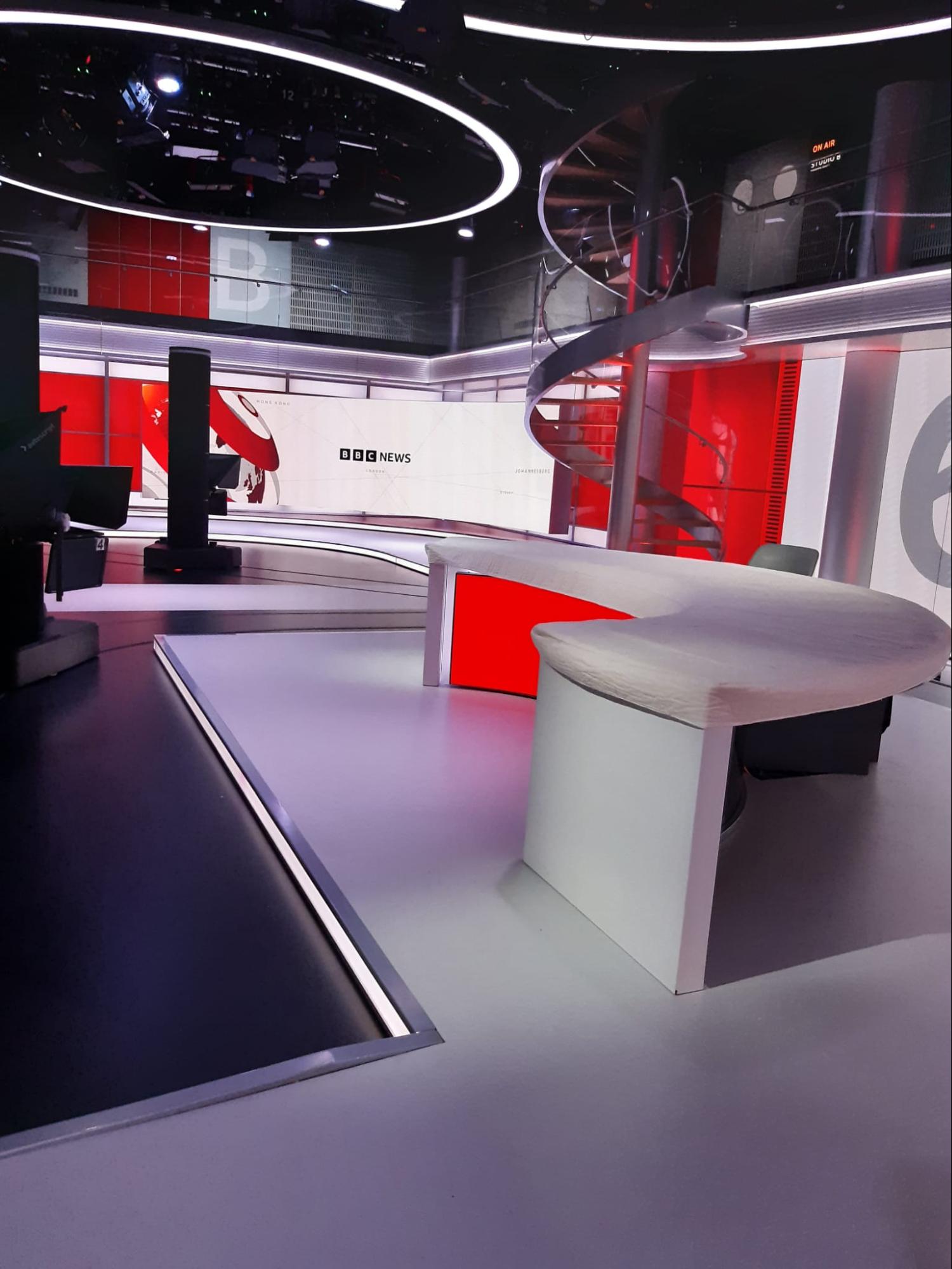
When at BBC, one must visit the New Broadcasting House and their news studios. The new home of BBC news is fully automated with robotic cameras from Massart and a crew of only 4 people. This very efficient way of working includes high tech tracking systems that have face recognition of the different news anchors. The towers are each linked to digital content, which makes it easier to present visual material. To make sure the viewer still feels at home, they even incorporated the staircase design elements.
BBC also invited us to their Research and Development department for some very interesting demo’s. Marc Gorriz Blanch gave more info on Machine Learning Restoration. In a short video, they show the different steps in this process: automatic rotoscope, face enhancement, clean up and light correction and user-guided colourisation. With the help of ML, they are able to give colour to images and videos out of the black-and-white ages. A team of only four people is now able to produce content that was previously too expensive to create or needed a team of around a thousand people. Closely related are some of the tools in Intelligent Video Production. Graeme Phillipson explained that with Novel View Synthesis they are able to scan an object to create a series of pictures from new viewpoints. With the help of AI assisted thumbnails and models based on eye movement data, BBC R&D is also able to create better user interfaces.
Another demo was on Personalised and Accessible Audio experiences for hearing-impaired communities, a topic we at VRT are also researching. The team of Jack Reynolds and Matt Paradis has been working closely with producers to understand the requirements and delivery pipeline which will allow the user control of the dialogue level, to improve intelligibility.
To end the day, Charlie Halford and Juliette Carter talked about the value of Data Pods at BBC. Pods can be hosted on a personal web server, or on a multi-user “pod provider”, where data is securely stored and the user is put in charge of their own data. Having a Pod gives the user more control about their own personal data and who to share it with. BBC uses Solid technology for their Pods and finds that this technology is the way forward since it is the only open source option in Europe at this moment. Data Pods are very valuable for the interoperability and portability within BBC and with other organisations, but it is not always easy to get the right user experience. In developing the BBC Together trial, they were able to find the good balance between giving too much info about granting BBC access to your Data Pod and getting across the right information.
Recap London
We’ve seen and learnt a lot in these couple of days, but what are the key takeaways?
First of all, virtual production is not just an upcoming technique. It is a way of producing new content and a lot is possible here. With tools like move.ai, it is now even possible for you and me to work with motion tracking simply with your own iPhone. Virtual production already made a huge evolution, but there is more to come and this is definitely something media companies should experiment with.
“The Future is Hybrid'' is the most important lesson we got from Maria Rua Aguete, Senior Research Director Media & Entertainment at Omdia, a global research and analytics company in the entire technology ecosystem. Together with her team, Maria gave an overview of some of the global media and entertainment trends. A first trend is that online video subscriptions will continue to grow and online video advertising is one of the fastest growing media segments. Final Pixel and Film Soho reminded us that virtual production is not only a powerful way of producing for TV or film makers, but also for advertisers. A lot of opportunities lay ahead in this area.
In the world of audio, a lot of investments are being made in the automotive industry. Google and Apple are extending their in-car entertainment services but at this moment, these services are mostly targeted at children. There are a lot of opportunities here, but questions about privacy, ethics and well-being still remain an important issue that needs to be addressed.
The City of London now has a Masters of Podcasting and a Centre of Podcasting Excellence dedicated to this ever important topic. The European ecosystem is mostly controlled by Spotify, but when looking local, smaller companies also play an important role. Sam Bailey brought it to our attention that with only 5% of listeners being willing to pay a small subscription fee, a podcast platform already has enough revenue to cover their production costs. PSM could thus still offer a free platform to boost local productions, while working together with commercial players in order to install a small monetization element.
To end this article, Bret Spencer, director of the new Centre of Podcasting Excellence, gave us a must-hear Podcast tip. He recommends “Dead Eyes” where actor and comedian Connor Ratliff talks about a very specific moment in his life: Why Tom Hanks fired him from a small role in the HBO mini-series Band of Brothers. The podcast has 3 seasons and, spoiler alert, he even got Tom Hanks to speak on the show!


