AI meets FM: engaging listeners with intercreativity

In an era of rapid technological advancement, Radio Host at YleX, Juska Wendland is redefining the role of radio by integrating AI to create richer, more interactive experiences. His work emphasizes intercreativity, a concept that shifts the focus from passive audience participation to active collaboration, transforming listeners from consumers into co-creators. This approach not only strengthens the connection between the audience and the show, but also highlights the untapped potential of AI as a communal tool.
The Philosophy of intercreativity
Juska’s philosophy is rooted in the belief that radio should prioritize collaboration over simple interaction. Basic actions like liking or voting, while valuable, do not fully engage listeners or make them feel part of the creative process. Instead, Juska explores ways to involve the audience in shaping the content of his shows in real-time, fostering a deeper sense of community and ownership.
For Juska, the audience is paramount. His goal is to ensure that technology serves people, not the other way around. By creating an unpredictable and participatory environment, he believes radio can evolve into a medium that goes beyond audio, encompassing visual and interactive elements to remain relevant in a digital age.
Experiments in AI integration
Case 1: Real-time music voting
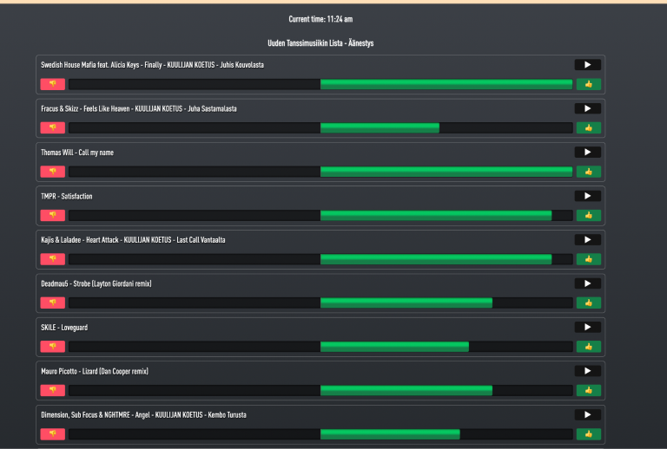
Juska transformed a traditional radio playlist into an interactive experience by introducing a real-time voting system. Listeners could give thumbs-up or thumbs-down reactions to tracks during the show, influencing the playlist dynamically. A Google Sheets integration allowed the audience to follow the results and even jump directly to the timestamp where a particular track was played. This simple, yet effective use of technology gave listeners agency and made them feel involved in the creation of the broadcast.
Case 2: Audience as content creators
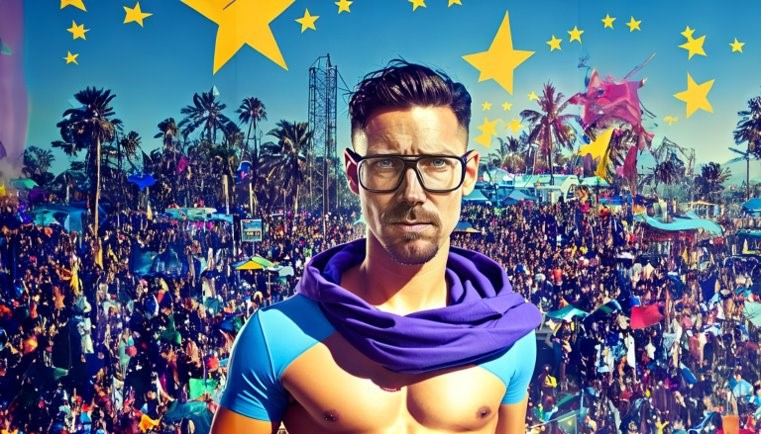
To push the boundaries of participation, Juska invited his audience to create AI-generated images based on specific themes. While YLE’s internal policies restricted the use of some AI tools, he turned this limitation into an opportunity by encouraging listeners to use accessible tools and submit their creations. Approved submissions were showcased live during the broadcast, rewarding contributors and fostering a sense of shared ownership in the show’s creative direction.
Case 3: Voice cloning
In one of his most engaging experiments, Juska used ElevenLabs to clone his voice. Listeners submitted text prompts, which the AI-generated voice then read aloud during the show. This playful interaction captivated the audience, who tested the AI’s limits with humorous or challenging prompts, such as strings of letters designed to trip up the system. The activity not only entertained, but also highlighted the balance between human creativity and machine limitations, creating a sense of community through shared experimentation.
Case 4: Real-time AI content creation
In an ambitious upcoming experiment that is currently in the development stage, Juska plans to allow listeners to send WhatsApp messages that will serve as prompts for AI-generated visuals displayed during the show. While technical and regulatory challenges, such as restrictions on tools like Stable Diffusion, have slowed progress, the project aims to further blur the line between audience and creator. If successful, it could set a new standard for real-time collaboration in live broadcasting.
Lessons and challenges
Juska’s work demonstrates that innovation requires risk-taking and a willingness to embrace imperfection. He believes that the fast pace of technological change means broadcasters must prioritize experimentation over perfection. By testing ideas directly with the audience, you can ensure that your initiatives remain fresh and responsive to listener feedback.
However, integrating AI into a traditional broadcasting framework is not without challenges. Internal company regulations, copyright concerns, and ethical considerations all require careful navigation. The solution for this lies in transparency and framing every project as a test, allowing for flexibility and adaptation as needed.
The future of radio
YleX experiments point to a future where radio is no longer confined to audio. Increasingly, video and visual elements play a crucial role in engaging younger audiences, as seen in the rise of video podcasts. By combining interactive visuals, audience-driven content, and AI-enhanced features, Juska envisions radio as a dynamic, multi-sensory platform.
In this vision, technology serves not as a replacement for human connection, but as a tool to deepen it. By putting the audience first and embracing the creative possibilities of AI, radio can remain a vibrant and relevant medium for years to come. The emphasis on community and collaboration offers a compelling blueprint for broadcasters seeking to innovate while staying true to their core mission.
Want to know more about audio and podcast audience engagement? Read Juska’s first PhD article: https://www.tandfonline.com/doi/full/10.1080/19376529.2024.2347609


