Public Spaces Incubator

For centuries, we've been thoughtfully planning public spaces – parks, libraries, town squares – to bring people together and weave the fabric of our society. So why is it that we consider the intricacies of our pluralistic society in physical spaces, but almost entirely neglect them in the digital world?
Right now, big American platforms dominate online public spaces. The problem is that these spaces don’t cater to everyone's needs. That’s why a consortium of public media organisations (ZDF, CBC/Radio Canada, RTBF, SRG SSR) have teamed up with nonprofit agency New_Public to create digital spaces that genuinely connect people and support meaningful civic discourse.
But how exactly are they planning to do this? User testing revealed that people want a safe space to communicate. Too often, the loudest voices are the only ones heard, leaving many feeling that their realities and values aren’t represented at all. This discourages people from commenting, even when they want to join the conversation. By fostering an environment that supports constructive exchanges, they aim to build a digital space that brings people together instead of dividing them.
Three concrete ideas
To make their vision a bit clearer, the Public Spaces Incubator developed three prototypes:
Comment Slider: This idea is about creating a platform that represents a range of opinions beyond simple yes-or-no categories, showing the nuances in between. Users can anonymously position themselves on a statement or question and see how others responded. Then, they can share their thoughts and arguments (explaining why they chose their position), view and filter other people's arguments and explore other perspectives. A feature called "similar to you" uses AI to highlight similar arguments among users with different conclusions, helping start meaningful exchanges and finding common ground despite differing views.
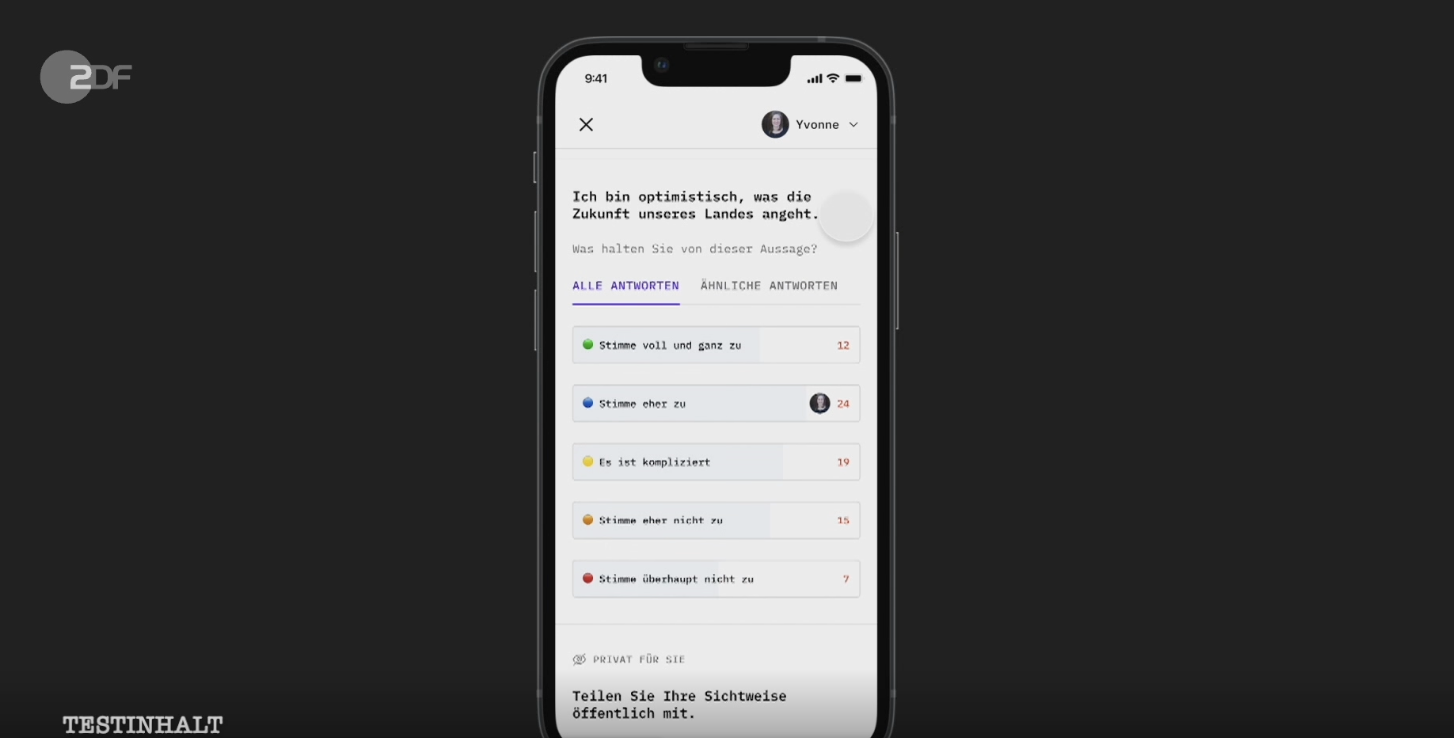
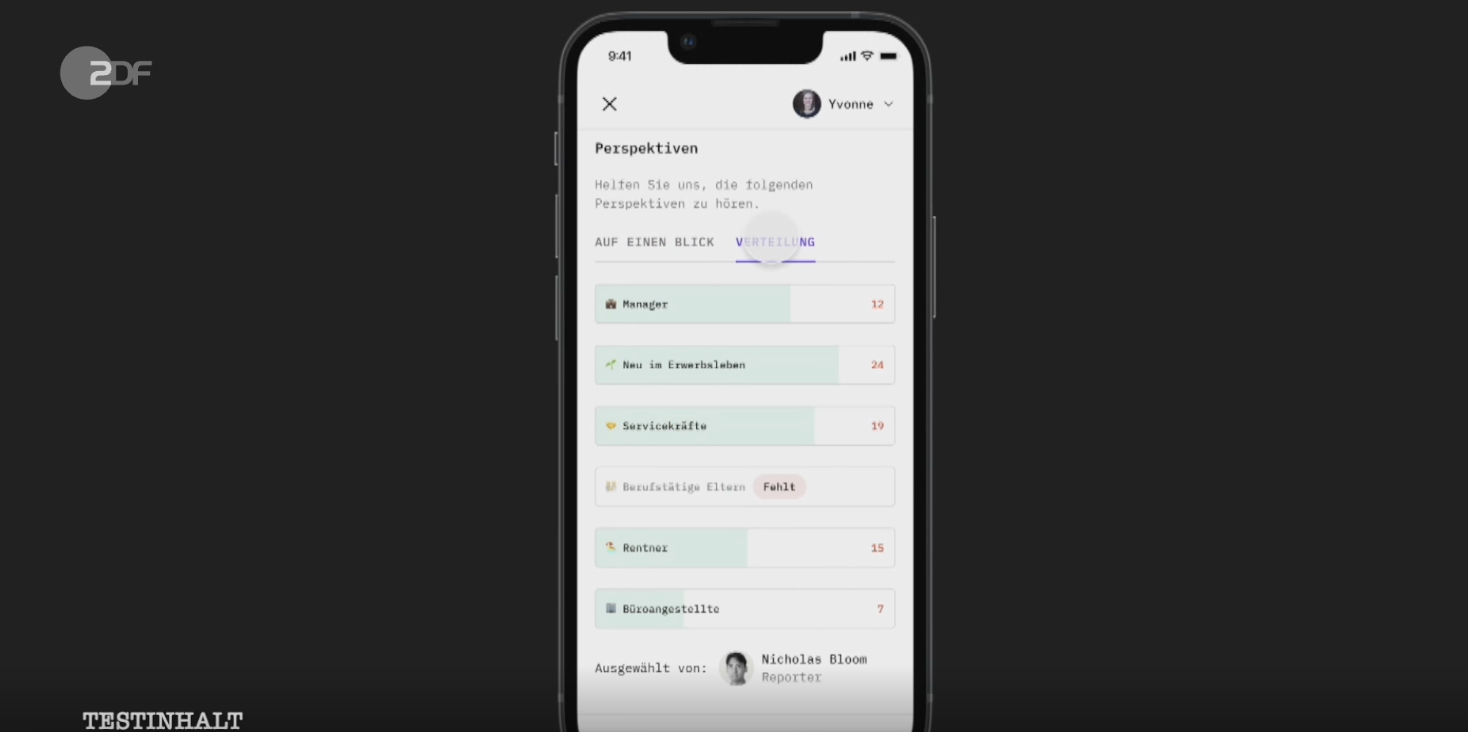
Representing Perspectives: This prototype lets users tag their comments with their professional or other roles in the conversation to give context (e.g. office or service workers). This helps others understand the commenter’s perspective. Users can see which perspectives are already represented and which ones are missing, encouraging underrepresented voices to join the conversation. Users can also suggest new perspectives that may have been overlooked, ensuring a richer, more inclusive discussion.
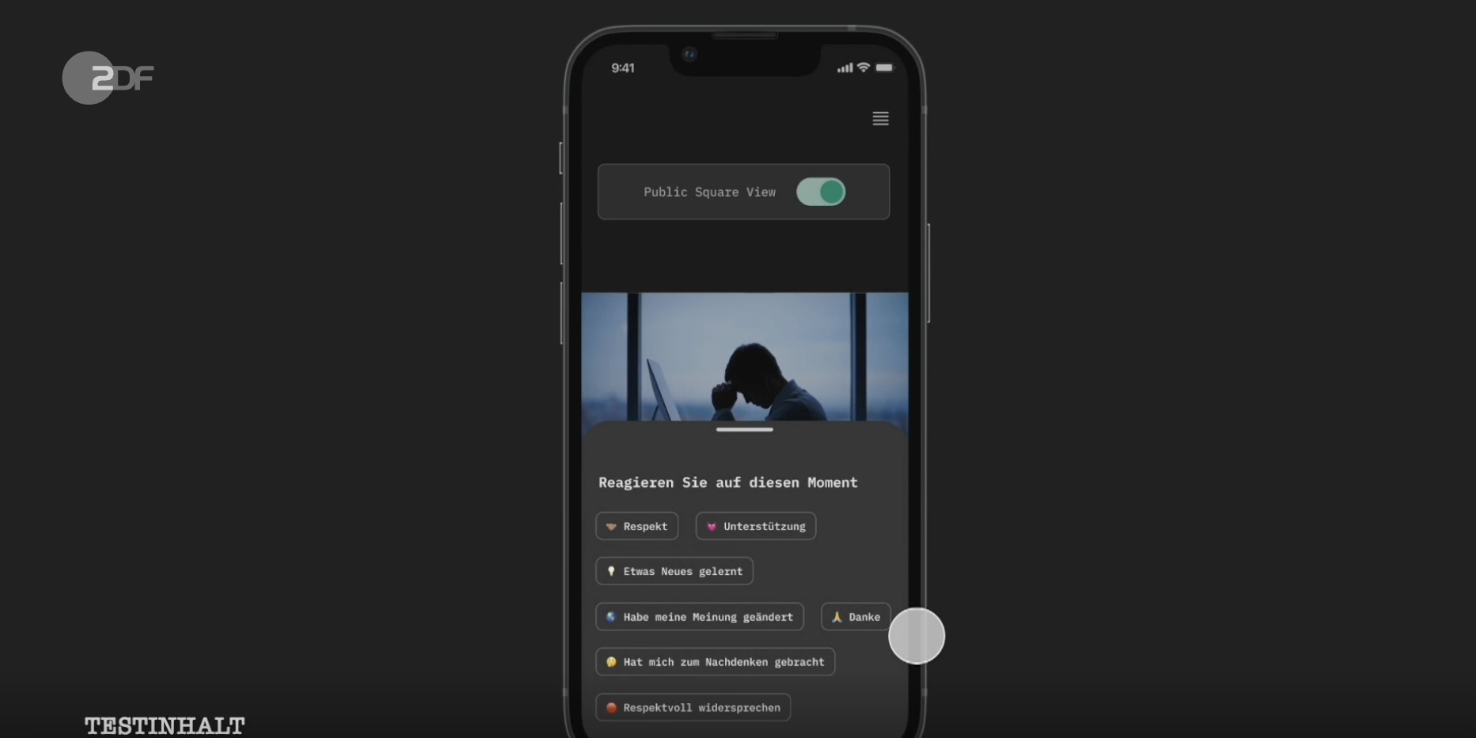
Public Square View: Inspired by young people (ages 18-25) who want communal online experiences, this concept activates when enough people are online on a website or video, letting users see and interact with others in the same virtual space. The platform offers various reactions beyond simple likes and dislikes, for example "I learned something new," to encourage positive behavior. Other low-barrier interactions, like voting, are also available. After the live component ends, users can move to deeper conversations in comment sections or rooms, ensuring participants have a shared context for discussions.
All of this to say: current social media platforms create a vicious cycle where a few loud, combative people dominate because the platforms support extreme positions and behavior. ZDF and its partners aim to create a safe space that pushes trolls to the margins and encourages broader participation also among people with more moderate views which usually are not favored by the algorithms of exisiting platforms.
LOOKING AHEAD
The Public Spaces Incubator started in 2022 with a research phase. During the following design phase, over 100 ideas were turned into prototypes. While not all of them are moving forward, the nine most promising onesare currently developed in iterations based on testing with real people in a media platform environment. By March 2025, the Public Spaces Incubator will release a minimal viable product (MVP) as open-source code, available to any interested parties, including other media companies. From 2025 to 2027, the focus will be on evolving the MVP into a stable mass product, building the necessary infrastructure, operations, and maintenance for large-scale functionality. They’re inviting new partners, primarily targeting public service media (PSM), but are open to collaborations beyond the PSM sphere. For more information, contact Paul-Christian Britz, PSI project lead for ZDF at paul-christian.britz@zdf.digital


