Adaptive Podcasting: The Future of Personalized Audio

In 2022, more than 60% of the population older than 12 has already listened to podcasts or are familiar with the medium. The engagement of podcasting is rising more and more every year. In the car, at home, at work or during exercising. "Storytelling is core to all humans but has changed in the age of publishing and broadcasting."
Ian Forrester, senior Firestarter at BBC R&D, wants to create the humane touch and feeling of telling stories in real life within the digital world via adaptive podcasting. “You can compare it with telling a story around a campfire to some friends” Ian says. The storyteller will change his story a bit according to the audience and the environment because he knows this will have an impact on how the audience perceives the story and connects with it.
What is adaptive podcasting?
“Adaptive podcasting is a technology that enables personalised podcasts, but documentaries, comedy, news, music, and other audio experiences as well.”
To further explain what adaptive podcasting is, we first must look at the term "Object-Based Media" or also called perceptual media. This is when you influence the media with implicit data sources. For example, in 2013 Ian Forrester created perceptive radio, a radio to which they added a light sensor, microphone, proximity sensor, and wifi. This allowed the radio to know if it was dark, if you were nearby, if there were any noises, what the weather was, the time of day,... and that data was then used to influence the audio playback. For example: Suddenly there is a loud noise whilst the radio is playing a podcast. The radio could then disable the dialogue of the podcast and just keep playing the background music on a loop until the loud noise has stopped. Because a radio is now much less relevant than it used to be and because all those sensors are already on your smartphone, Ian wanted to create an app that takes the same approach as the perceptive radio but in a more sophisticated way.
How does it work?
Without being too technical: the app uses your personal data and other data points to affect your podcast. When we talk about personal data, we mean your name, location, the battery level of your smartphone, if and what for you are using your smartphone, if you’re indoor or outdoor, whether you are at home or work, the noises in your environment at that moment and the list goes on. The non-personal data that could be used: weather, time of day, sun elevation and more.
I hear you thinking “what about my privacy?”, well, for ethical reasons, Ian has ensured that the data used will only be modified and updated on your local device. Your personal data does not leave your own phone. The app is also open source, in other words you can literally see and control what the app does with all your data.
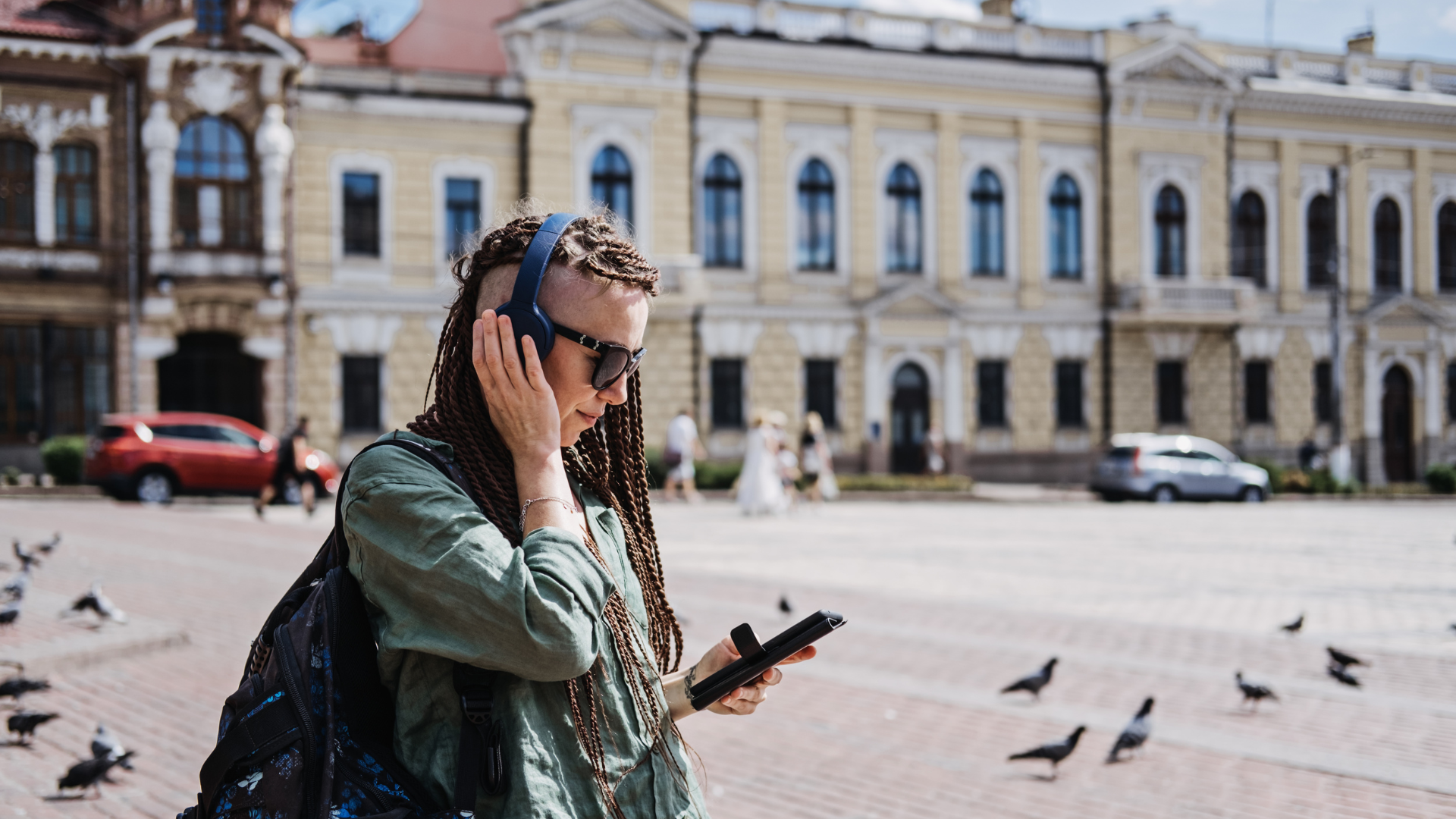
Features of adaptive podcasting
What does this technology actually entail? What can we expect of working with the application that is launched in September 2022? For starters, the application makes it possible to vocally address you. This text to speech feature gives an even more of that personal experience and also ensures that all texts sound like a human resembling voice. The podcasts will use the binaural recording method, which is a method where you use two microphones, arranged with the intent to create a 3-D stereo sound for the listener as if it is being heard live. It is best experienced by headphones though. But of course with adaptive podcasting it can also detect when there are no headphones connected and adjust to keep the sound as good as possible.
With all data available the app will cater the podcast to fit the situation. For example: it will play the podcast more quietly in the late evening. It can choose what background music or sounds are being played. It also controls the background music volume to bring it forward on certain occasions. And for those of us who don't have much storage left on their smartphones, the app detects this and then chooses to decrease the podcast file size. It leaves some extra's out.
It can change the background sound depending on your geography. If you are in the city it can play more city-like noises. You can also choose your sports-commentary balance, meaning that when you are listening to a podcast about football, you can choose in the app to have more focus on your favourite team. The app can also know how much your commute to work mostly takes. It can then change the length of the podcast. If you have some delay on your train it can even make the podcast longer. It's just that easy.
The release
In September 2022, two tools were launched for the first technical explorations. The Adaptive Podcasting player app and Makerbox. Sponsored by the European Broadcasting Union (EBU), this web editing tool allows you to create adaptive podcasts without having any coding experience. Here podcasters can compile and organise audio objects, set the parameters and control the content changes dependent on the available data.Thanks to Ian Forrester, the technology is being closely monitored and improved where necessary. So soon your podcast experience may look different in the future.
Can’t wait to try and test these apps? Click on these links to download them:
Adaptive Podcast player app: https://play.google.com/store/
Makerbox: https://www.test.bbc.co.uk


