BBC Sounds Daily: Pioneering AI-driven personalised audio for connected cars

BBC's Innovation Labs developed Sounds Daily, an experimental personalised audio streaming service designed specifically for in-car listening during morning commutes. This groundbreaking project combines generative AI, synthetic voices and flexible content delivery to create a seamless, distraction-free listening experience that adapts to individual preferences and habits.
The Challenge and Solution
With the average UK commute lasting just 16 minutes, and connected cars offering increasingly more entertainment options, traditional radio faces stiff competition from streaming services and apps. Sounds Daily addresses this by creating a one-click, personalised listening experience that understands user habits and serves relevant content at the right moment – similar to tuning into a favourite radio station, but tailored to each individual listener.
How It Works
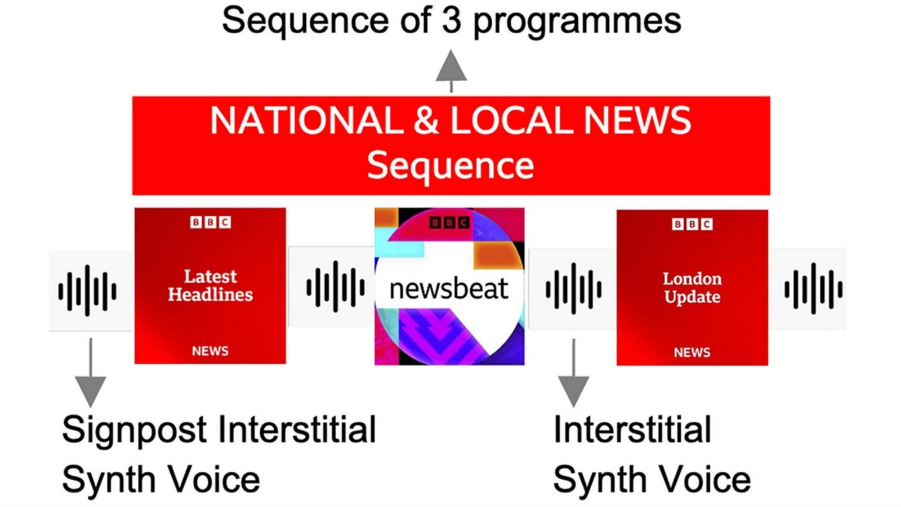
The system leverages GPT-4 to generate scripts and seamless transitions between content pieces, using BBC metadata and IP guardrails. Synthetic voices introduce programmes, provide signposting for upcoming content and create smooth bridges between different types of audio – from podcast clips to news bulletins. This approach makes it possible to personalise content streams for thousands of users simultaneously, something impossible for human presenters to achieve at scale.
Built within BBC Sounds Sandbox – a mirrored copy of BBC Sounds used for experimentation – the service combines multiple BBC tools including R&D's StoryFormer and the universal recommendations engine. An AWS Lambda function serves as the core engine, generating sequences that blend synthetic media with curated BBC content.
The system creates dynamic playlists by analysing six months of user listening data and survey responses about content preferences. It generates personalised sequences of three programmes, classified by content type (news, sport, music), with AI-generated interstitials providing context and flow. The synthetic voice can be customised and provides personalised greetings using the driver's name and current time.
Trial Results and Learnings
The three-week trial with 80 participants revealed several important insights:
- Users expect adequate personalisation from the start, not just random content that improves over time
- Content freshness is crucial, particularly for news and sports updates
- The system successfully reduced driver distraction while maintaining engagement
- Technical challenges included content order inconsistencies and occasional misidentification of programmes
Sounds Daily demonstrates how traditional broadcasters can innovate by combining emerging AI technologies with existing content libraries and technical infrastructure, creating new pathways to engage audiences in evolving media consumption contexts. The project offers a compelling blueprint for media organisations looking to develop personalised, AI-driven content experiences that meet audiences where they are - literally and figuratively.
- Leverage existing infrastructure: BBC's approach of integrating established systems rather than building from scratch accelerated development and eased potential adoption paths.
- Focus on context-specific needs: Designing for the specific constraints and opportunities of in-car listening (16-minute average journeys, safety considerations) created a more targeted solution.
- Combine AI with editorial oversight: The blend of automated content generation with human curation and guardrails maintained quality while achieving scale.
- Prioritise user trust: Success depends on users trusting that the system will deliver relevant content without excessive interaction – crucial for in-car safety.
- Plan for content freshness: Dynamic content categories like news require real-time updates to maintain relevance throughout the day.
What’s Next?
BBC continues to explore personalised services within the audio space, taking a universal view that incorporates devices on the move including in-car systems. Future developments may focus on automated content selection and sequencing, moving beyond manual playlist curation to fully automated personalisation.


